
Why Does a Run Capacitor Fail?
Why Does a Run Capacitor Fail? This question matters whenever a motor hums, overheats, or struggles to start. A Run Capacitor supports continuous motor operation by improving torque, efficiency, and phase balance. When its capacitance drifts, the motor may draw excessive current and produce damaging heat.
The U.S. Energy Information Administration’s 2020 Residential Energy Consumption Survey reported that about 89% of U.S. homes used air-conditioning equipment. That widespread use makes capacitor reliability an important maintenance concern. ASHRAE Handbook guidance identifies temperature, voltage quality, motor loading, and ventilation as key influences on motor-system performance. IEC 60252-1 also establishes performance and safety requirements for motor capacitors. These references provide a technical foundation, but field conditions remain less predictable.
Heat is often the quiet culprit. A capacitor mounted beside a condenser coil may face repeated temperature spikes. Swollen cases, oil leakage, cracked terminals, and a burnt odor are practical warning signs. Loose connections can create resistance and heat at a single terminal. Incorrect microfarad ratings can force the motor outside its intended operating range. Power surges and frequent cycling may accelerate internal deterioration. Sometimes, the capacitor is blamed unfairly. A failing motor, blocked airflow, or damaged relay may produce similar symptoms. That detail deserves attention.
A reliable diagnosis requires measured capacitance, supply voltage, operating current, and visual inspection. Manufacturer specifications should guide every replacement. Guesswork is expensive. Even experienced technicians can miss a weak capacitor during a brief test. Therefore, this article examines why a Run Capacitor fails, how failure develops, and which checks can separate the capacitor from the real cause.
What a Run Capacitor Does in an Electrical System
A run capacitor continuously supports a motor after startup. It remains connected to the auxiliary winding, creating a phase shift between current and voltage. This shift produces a rotating magnetic field, smoother torque, and better operating efficiency. Without it, a single-phase motor may hum, overheat, or struggle under load.
The U.S. Department of Energy estimates that industrial motor systems consume about 68% of industrial electricity. Even a small capacitor problem can therefore waste energy across long operating hours. The International Energy Agency also reports that motor systems use roughly half of global electricity. These figures explain why a correctly sized run capacitor matters beyond one appliance.
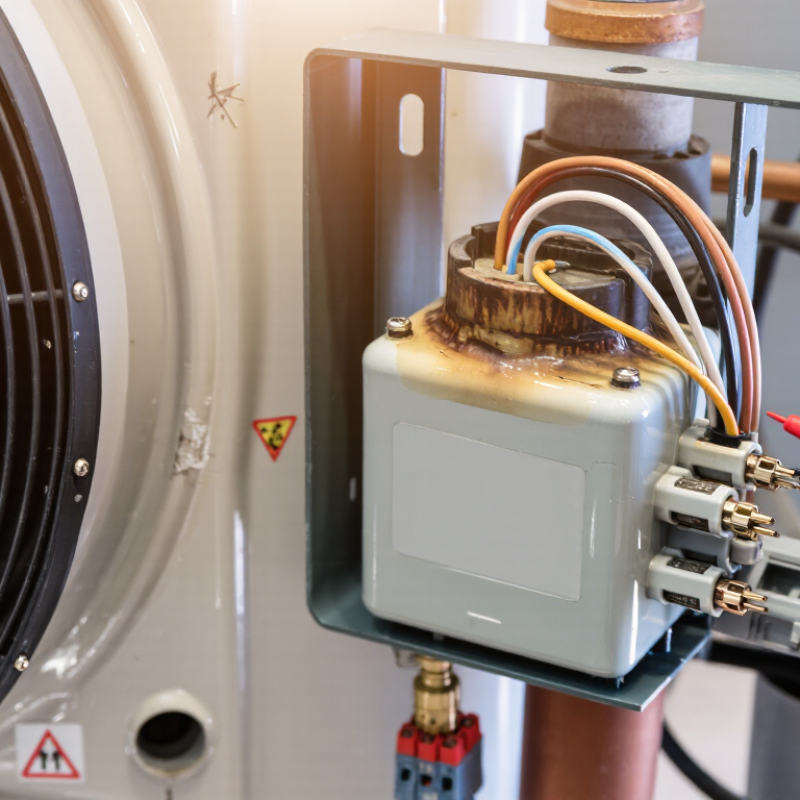
In field inspections, technicians commonly find swollen cases, oil leakage, cracked terminals, or discolored insulation. Heat is a major factor. High ambient temperatures, restricted airflow, frequent cycling, and voltage stress accelerate dielectric aging. Harmonic distortion can add further electrical stress. A capacitor with reduced microfarad capacity may still look normal, which is easy to miss. Measurement is essential.
Technicians should compare the measured capacitance with the motor’s specified range. They should also check voltage rating, terminal condition, and safe discharge procedures. NEMA motor guidance emphasizes matching components to the motor’s operating design. A higher voltage rating is generally acceptable, but an incorrect capacitance value can reduce torque or increase winding temperature. I would not trust appearance alone. That assumption fails too often.
A run capacitor continuously supplies reactive current to help an AC motor maintain its phase relationship, torque, and efficiency. The chart shows the ideal RMS current calculated for common capacitance values at 230 V and 60 Hz using I = 2πfCV. Excessive current caused by incorrect capacitance, overvoltage, poor cooling, harmonics, moisture, or normal aging can increase internal heating and eventually cause the capacitor to fail.
How a Run Capacitor Operates During Continuous Motor Use
Why Does a Run Capacitor Fail?
A run capacitor stays connected while the motor operates, unlike a starting capacitor. It continuously shapes the phase relationship between voltage and current. This helps the motor produce smoother torque, better efficiency, and steadier operation. In a fan or pump, that means fewer harsh electrical pulses and less mechanical vibration.
During continuous use, the capacitor also absorbs heat from nearby windings, terminals, and the surrounding enclosure. Excess heat gradually weakens its dielectric material. High voltage spikes can damage the internal film, while loose connections create resistance and additional heating. A technician may notice a swollen case, oil leakage, humming, or a motor that struggles under normal load. Sometimes, the warning is less obvious. The motor simply runs hotter than expected.
A correct replacement must match capacitance, voltage rating, frequency, and physical conditions. A higher voltage rating can provide useful margin, but the capacitance value must remain suitable for the motor design. This detail is often underestimated. Poor airflow, frequent cycling, and undersized wiring can shorten capacitor life even when the part appears correctly selected. Testing should be done with power disconnected and stored charge safely released. Readings can be misleading if the capacitor remains connected to the circuit, so experienced technicians isolate it before measuring. The exact failure cause is not always obvious, and replacing the capacitor alone may leave the real problem untouched.
Common Causes of Run Capacitor Failure
Why Does a Run Capacitor Fail?
Common Causes of Run Capacitor Failure
A run capacitor can fail from heat, age, electrical stress, or poor installation. In field inspections, excessive cabinet temperature appears often. A capacitor mounted beside a hot compressor may dry out internally. Its metal case can bulge, leak oil, or feel unusually warm. Incorrect capacitance is another common cause. A replacement with the wrong rating can force the motor to draw unstable current. The motor may hum, overheat, or struggle during continuous operation.
Loose terminals and damaged wiring create additional stress. Moisture can corrode connections, while vibration slowly loosens screws. Power surges may weaken the dielectric layer, even when no damage is visible.
Some failures are not caused by the capacitor alone. A failing motor, blocked airflow, or frequent cycling can overload it repeatedly. Diagnosis is not always tidy. I have seen a new capacitor fail quickly because the original motor problem was overlooked.
Tips: Turn off and verify power before inspection. Never rely only on a switch. Check the capacitor’s rated capacitance, voltage, physical condition, and terminal tightness. A technician should measure capacitance and motor current with suitable instruments. Compare readings with the equipment manufacturer’s specifications. Do not guess from appearance alone. A capacitor can look normal and still perform poorly. Keep the cabinet clean, improve airflow, and investigate repeated failures instead of replacing parts blindly.
Signs and Effects of a Failing Run Capacitor
Why Does a Run Capacitor Fail?
Signs and Effects of a Failing Run Capacitor
A run capacitor supports a motor throughout its operating cycle. When it weakens, the motor may hum before starting, start slowly, or stop under load. The outdoor fan can turn noticeably slower than usual. Airflow may also feel weak because the blower cannot maintain its designed speed. Sometimes, the compressor repeatedly tries to start and trips the circuit breaker. That symptom should not be ignored.
Look closely at the capacitor. A swollen top, leaking oil, or a burnt electrical smell suggests internal damage. However, appearance alone can mislead. A capacitor may look normal while its capacitance has already dropped below the rated range. A technician should disconnect power, safely discharge the component, and test it with a suitable capacitance meter. Touching terminals casually is dangerous.
Field service experience shows that a weak capacitor can increase motor current and heat. Continued operation may damage windings, especially during hot weather or frequent cycling. The motor may sound rough, but noise is not proof of capacitor failure. Loose wiring, a failing relay, or a restricted mechanical part can create similar effects. I have seen quick visual checks send repairs in the wrong direction. Testing the marked microfarad value against the measured result is more dependable. Even then, readings should be interpreted alongside voltage, current, and operating conditions.
| Failure Sign or Condition | What Happens Electrically | Common Observable Effect | Potential Effect on the Motor | Typical Severity | Recommended Action |
|---|---|---|---|---|---|
| Capacitance has dropped below its rated value | The capacitor provides less phase shift and reactive current than the motor circuit requires. | Slow starting, reduced torque, humming, or difficulty maintaining normal speed under load. | Higher operating current, reduced efficiency, increased winding temperature, and possible thermal overload trips. | High | Disconnect power and have the capacitor tested with a capacitance meter. Replace it if it is outside the equipment manufacturer's tolerance. |
| Capacitance has increased above its rated value | Excessive phase-shift current flows through the auxiliary winding. | The motor may run unevenly, draw abnormal current, or produce unusual heat and noise. | Auxiliary-winding stress, overheating, reduced motor life, and possible winding damage. | High | Stop operation and verify the capacitor value, voltage rating, wiring, and motor specifications before replacement. |
| Open-circuit capacitor | The intended auxiliary current path is interrupted, so the motor may lose its designed running phase relationship. | A single-phase motor may fail to start, hum, or require manual assistance to begin rotating. | Rapid overheating if power remains applied while the rotor is stalled or heavily loaded. | High | Switch off and isolate the supply. Do not repeatedly attempt to start the motor until the capacitor and circuit are checked. |
| Short-circuit capacitor | Very high current can flow through the capacitor circuit, limited mainly by the supply and circuit impedance. | Fuse operation, breaker tripping, smoke, melted wiring, or visible damage to the capacitor. | Damage to wiring, windings, switching components, or other connected electrical parts. | High | Keep the equipment de-energized. Inspect for secondary damage and replace the capacitor with one having the correct capacitance and voltage rating. |
| Bulging, splitting, leaking, or distorted case | Internal pressure, dielectric breakdown, overheating, or electrolyte degradation may have affected the capacitor. | Visible swelling, oil or electrolyte residue, cracked casing, or a vent that has opened. | Unreliable motor operation, reduced capacitance, short circuit, or complete failure. | High | Do not continue operating the equipment. Replace the visibly damaged capacitor and investigate overheating or overvoltage causes. |
| Excessive heat near the capacitor | Heat accelerates dielectric aging and can increase electrical losses inside the capacitor. | Discolored casing, softened terminals, brittle insulation, or a noticeable hot smell. | Premature capacitance loss, insulation failure, and shortened motor or capacitor service life. | Medium to High | Check ventilation, ambient temperature, motor current, terminal tightness, and the capacitor's temperature rating. |
| Loose, corroded, or burned terminals | Increased contact resistance creates voltage drop and localized heating. | Intermittent operation, arcing marks, flickering, buzzing, or heat at the terminal connection. | Unstable motor performance, terminal failure, and possible damage to the capacitor or winding circuit. | Medium to High | Isolate power, inspect and repair the connection, and replace damaged terminals or conductors before restarting. |
| Abnormal motor noise or vibration | Incorrect capacitance changes the phase relationship and can make the motor's magnetic field less balanced. | Humming, rattling, rough running, increased vibration, or a change in normal operating sound. | Additional mechanical stress, bearing load, heat generation, and reduced motor efficiency. | Medium | Check the capacitor value and motor alignment, bearings, mounting, and load before returning the equipment to service. |
| Repeated thermal-overload trips | Capacitance deterioration may cause the motor to draw more current than its normal operating value. | The motor runs for a period, becomes hot, and shuts down until the overload protector resets. | Repeated thermal cycling and insulation aging, potentially leading to permanent winding failure. | High | Measure running current and capacitor capacitance. Do not bypass the overload protector or continue repeated restart attempts. |
| Incorrect replacement capacitor | A mismatched capacitance or insufficient voltage rating changes circuit current and dielectric stress. | Immediate overheating, poor performance, nuisance trips, or premature capacitor failure. | Motor winding stress, reduced efficiency, capacitor rupture, or electrical damage. | High | Use the specified capacitance, equal or higher AC voltage rating where permitted, correct frequency suitability, and proper physical connections. |
| Normal aging and repeated electrical cycling | Dielectric materials gradually lose performance; each start, stop, heat cycle, and voltage transient adds stress. | Gradual loss of motor torque, increasing noise, longer run-up time, or a measured capacitance outside tolerance. | Declining efficiency and eventual open-circuit, short-circuit, or unstable operation. | Medium | Include the capacitor in scheduled inspection and replace it when testing shows deterioration or when the equipment service procedure requires it. |
| Safety note: A run capacitor can retain a dangerous charge after power is removed. Only qualified personnel should isolate, discharge, test, and replace it using appropriate electrical safety procedures. | |||||
How Run Capacitor Failure Is Tested and Prevented
Why Does a Run Capacitor Fail?
How Run Capacitor Failure Is Tested and Prevented
Run capacitor failure is often linked to heat, overvoltage, moisture, or loose connections. The U.S. Department of Energy reports that motor-driven systems consume about 70% of industrial electricity. Small capacitor losses can therefore create wider efficiency problems. A weak capacitor may cause hard starting, higher winding temperature, humming, or unstable operation. Sometimes, it fails without visible swelling.
Technicians should isolate power and discharge the capacitor before testing. A capacitance meter checks whether the measured value matches the nameplate tolerance. An insulation test can reveal leakage, while an ESR test may expose internal deterioration. IEC 60252-1 provides requirements for AC motor capacitors, including electrical and endurance testing. Visual inspection still matters. Oil stains, cracked cases, burnt terminals, and bulging surfaces deserve attention. A capacitance reading alone is not enough. I have seen maintenance decisions rely too heavily on one measurement.
Prevention begins with correct voltage and capacitance ratings. Keep the capacitor away from excessive heat and improve airflow around the motor. Tighten terminals during scheduled maintenance, but avoid damaging the case. Record temperature, current, and capacitance trends over time. NEMA motor-maintenance guidance supports planned inspection because abnormal current often appears before complete failure. Yet replacement intervals should not be guessed. Site conditions differ. A cooler motor room may extend service life, while frequent cycling can shorten it sharply. That uncertainty deserves regular review.
Article Source:
We Meet Our Clients Needs.
Meeting the diverse needs of our clients, we have complete machining facilities for everything from single part prototypes to large quantity production. Our small size is one of our biggest assets. It allows us to control costs and maintain the highest of standards.
Quality orientated and delivery always on time or earlier than originally promised.
Strongly recommend MSD.