Top 10 Machine Tool Manufacturers in the World?

The machine tool industry is a quiet measure of industrial strength. Its lathes, machining centers, grinders, and forming presses shape aircraft parts, vehicle systems, medical devices, and factory equipment. In Gardner Intelligence’s 2024 World Machine Tool Survey, global machine tool consumption reached approximately $81.9 billion in 2023. Global production remained higher, at about $88.9 billion. These figures show a large market, but they also reveal uneven regional demand and changing investment patterns.

This introduction examines the top 10 machine tool manufacturers in the world through production scale, technology, geographic reach, and customer trust. The ranking will consider evidence from Gardner Intelligence, CECIMO industry reports, VDW data, and company disclosures. These sources help compare manufacturers across different reporting standards. Still, no ranking is perfectly objective. Currency changes, acquisitions, private-company reporting, and different product definitions can distort direct comparisons. That matters.

A strong manufacturer is not judged by revenue alone. A reliable machine must hold tight tolerances beside a cutting tool, during long production shifts, with limited downtime. Energy efficiency, automation readiness, service networks, and software integration now matter greatly. Recent CECIMO reports also highlight weaker European demand and continuing pressure from global competition. The market is moving. Fast.

Some companies lead through precision. Others win through scale, customization, or after-sales support. The following overview therefore treats the top 10 as a researched comparison, not an absolute verdict. Readers should review each company’s latest filings and regional data before making investment decisions. Numbers can guide judgment, but they cannot replace factory-floor experience.
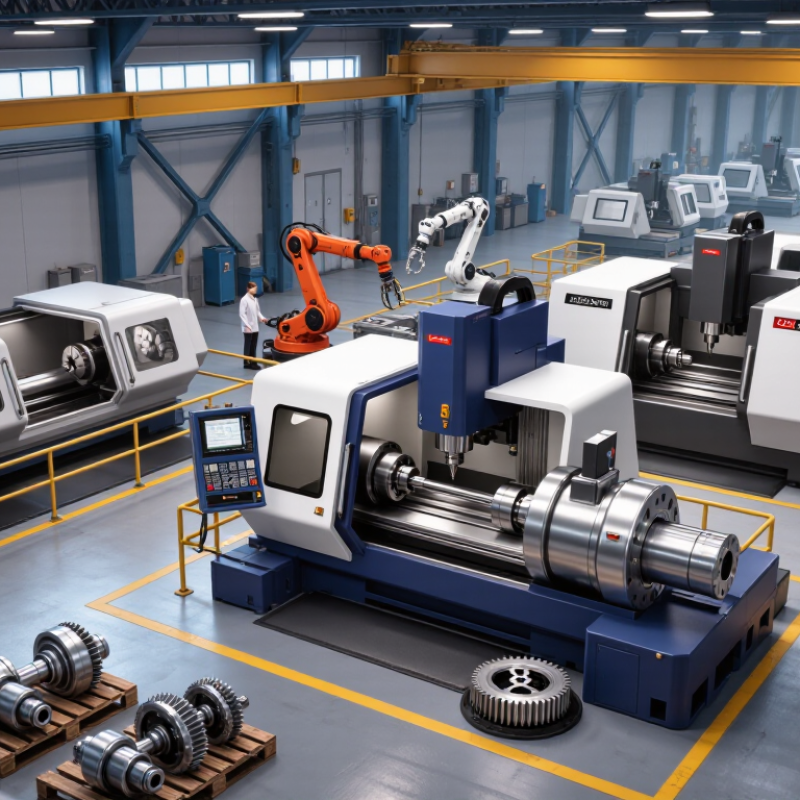
Top 10 Machine Tool Manufacturers in the World?

Defining the Criteria for Ranking Global Machine Tool Manufacturers

Top 10 Machine Tool Manufacturers in the World?

Ranking global machine tool manufacturers requires more than sales volume or factory size. A credible assessment starts with measurable criteria: precision, machine availability, service quality, innovation, and financial stability. Precision should be tested through repeatability reports, thermal compensation records, and finished workpieces from demanding applications. Availability also matters. A machine sitting idle for three weeks can cost more than a higher purchase price. From production-floor experience, response time often reveals more than polished brochures. Ask how quickly a technician arrives, not merely whether support exists.

Each category needs a transparent weight. Manufacturing accuracy might receive 30 percent, lifecycle service 25 percent, technology 20 percent, delivery reliability 15 percent, and environmental performance 10 percent. These figures are useful, but not universal. A small aerospace supplier may value micron-level stability, while a general job shop may prioritize easy setup and affordable maintenance. Independent audits, customer interviews, warranty records, and multi-year data should support every score. One impressive demonstration is not enough. It can hide limitations.

The ranking should separate evidence from reputation. Published test standards help, yet field conditions remain messy. Local power quality, operator training, and spare-parts access can change results. I would record these variables instead of pretending they do not exist. Some data may be incomplete. That weakness should be disclosed, not quietly averaged away. A reliable list rewards consistent performance across regions, applications, and years, while allowing careful revision when stronger evidence appears.

Overview of the Top 10 Machine Tool Manufacturers Worldwide

Overview of the Top 10 Machine Tool Manufacturers Worldwide

The world’s top ten machine tool manufacturers are judged by more than annual sales. Analysts examine production value, installed machines, export reach, automation, and after-sales support. Gardner Business Media’s 2024 World Machine Tool Survey estimated global machine tool consumption at about 86 billion US dollars in 2023. Asia remained the largest manufacturing center, while Europe and North America kept strong positions in precision equipment and aerospace applications.

A useful comparison separates the leading manufacturers into several strengths. Some specialize in high-speed machining centers. Others focus on turning systems, grinding equipment, or flexible production lines. The VDW and Oxford Economics reports have highlighted weaker global investment in 2024, especially in automotive-related machinery. This makes order stability an important ranking factor. Service networks matter too. A technically excellent machine can lose value when spare parts arrive slowly. I have found that factory visits reveal details that rankings often miss, including software training, spindle vibration, and operator access. Rankings are helpful, but they are never perfect.

Tips: Compare five-year sales trends, not one strong year. Check local service coverage. Ask for energy-use data and real production references. Also, review cybersecurity practices for connected equipment. Shortlisted suppliers should explain maintenance costs clearly.

Key Technologies and Products Offered by Each Manufacturer

Across the world’s top ten machine tool manufacturers, product strength usually begins with CNC machining centers. One leading group develops five-axis systems for aerospace parts and complex medical components. Another focuses on high-speed vertical mills, using rigid frames and thermal compensation. A third is known for horizontal machining centers with automatic pallet changers. Productivity matters.

Several manufacturers specialize in turning technology. Their CNC lathes support live tooling, multitasking, and robotic loading. Some produce Swiss-type machines for miniature shafts, connectors, and surgical parts. Others build large turning centers for energy equipment and heavy industrial components. These machines often combine powerful spindles with vibration control. Small details decide quality.

Grinding technology remains essential among the leading ten. Precision manufacturers offer cylindrical, surface, and gear grinders with micron-level repeatability. Their systems use in-process measurement to correct dimensions during production. A few also provide wire and sinker electrical discharge machines for hardened materials and narrow internal features. Additive manufacturing is another growing area, combining metal deposition with five-axis cutting. It is promising, but maintenance costs can be underestimated.

Automation connects many of these product lines. Manufacturers supply bar feeders, tool magazines, robotic cells, digital twins, and factory-monitoring software. Some platforms track spindle load, tool wear, and energy use in real time. From practical factory visits, integration often matters more than brochure specifications. No ranking is perfectly neutral. I may overvalue accuracy and understate operator training, which still shapes daily results.

Top 10 Machine Tool Manufacturers in the World? - Key Technologies and Products Offered by Each Manufacturer

Rank Manufacturer Profile Primary Base Key Technologies Representative Product Categories Typical Applications Distinctive Capability
1 Manufacturer Profile A Japan High-speed CNC control, simultaneous five-axis machining, multitasking turning and milling, robotic automation, digital production monitoring Five-axis machining centers, horizontal machining centers, CNC lathes, mill-turn machines, factory automation systems Aerospace structures, automotive components, medical implants, precision mold and die production Integrated machining and automation solutions for complex, high-accuracy parts
2 Manufacturer Profile B Germany Five-axis simultaneous machining, high-rigidity machine design, advanced CNC control, thermal compensation, automated pallet handling Universal milling machines, five-axis machining centers, vertical and horizontal machining centers, production cells Aerospace, energy, automotive, heavy equipment, precision engineering Strong performance in demanding five-axis and heavy-duty machining operations
3 Manufacturer Profile C Japan High-speed linear motor drives, precision CNC control, five-axis machining, intelligent monitoring, automated loading and unloading Vertical machining centers, horizontal machining centers, five-axis machines, CNC turning centers, automation equipment Die and mold, electronics, medical devices, aerospace and high-volume automotive manufacturing High-speed cutting and stable micron-level production for complex components
4 Manufacturer Profile D Switzerland Ultra-precision turning, Swiss-type sliding-headstock technology, micro-machining, bar-feeding automation, high-speed spindle control Swiss-type CNC lathes, sliding-headstock turning centers, automatic bar machines, precision machining cells Medical instruments, dental parts, electronics, watchmaking, small automotive components Exceptional productivity and accuracy for small-diameter, long and intricate parts
5 Manufacturer Profile E United States CNC turning and milling, integrated mill-turn machining, probing, robotic tending, high-productivity production control CNC lathes, vertical machining centers, horizontal machining centers, mill-turn centers, robotic cells General engineering, oil and gas, aerospace, automotive, industrial equipment Broad machine portfolio with practical automation options for job shops and production plants
6 Manufacturer Profile F Germany High-precision turning, complete machining, modular automation, process monitoring, digital machine connectivity CNC turning centers, twin-spindle machines, mill-turn centers, automatic production systems Automotive powertrain, hydraulic systems, electronics, medical and precision engineering Efficient complete machining with strong emphasis on automated, repeatable production
7 Manufacturer Profile G Japan CNC turning, multitasking machining, gear production, laser processing, adaptive control and production automation CNC lathes, mill-turn centers, machining centers, gear machines, laser cutting and welding systems Automotive, aerospace, construction machinery, energy and industrial machinery Combination of conventional cutting, gear manufacturing and advanced hybrid processes
8 Manufacturer Profile H Taiwan CNC milling, turning, five-axis machining, high-speed spindle systems, automatic tool changing and pallet systems Vertical machining centers, horizontal machining centers, CNC turning centers, five-axis machines Automotive parts, consumer electronics, molds, general metalworking and subcontract machining Scalable production equipment combining competitive pricing with a wide model range
9 Manufacturer Profile I Italy Heavy-duty turning, large-part milling, hydrostatic guideways, high-torque spindles, customized machine engineering Large CNC lathes, vertical turning lathes, floor-type milling machines, portal machining centers Energy equipment, railways, shipbuilding, aerospace structures and heavy machinery Large-format machining platforms designed for oversized and heavy workpieces
10 Manufacturer Profile J South Korea CNC turning and milling, five-axis machining, twin-spindle production, robotic automation, smart factory connectivity CNC lathes, vertical and horizontal machining centers, mill-turn machines, five-axis machining centers Automotive, aerospace, defense, energy, molds and general industrial production Flexible high-volume machining supported by automation and connected production technologies

Note: Manufacturer names and brand identifiers are intentionally omitted. The profiles summarize established machine-tool technologies and product categories associated with leading manufacturers by region and market segment.

Global Markets, Production Capacity, and Industry Applications

Top 10 Machine Tool Manufacturers in the World?

The global machine tool market is shaped by production scale, engineering depth, and regional demand. A useful top-ten comparison should examine more than annual sales. It should measure factory capacity, automation levels, delivery stability, and technical support. Manufacturers with several production sites can serve customers faster and reduce supply risks. However, capacity does not always equal quality.

In East Asia, large plants often produce high volumes of turning centers, machining centers, and grinding systems. European producers commonly focus on precision, complex automation, and specialized engineering. North American facilities emphasize flexible production and rapid customization. Regional demand changes the ranking. Electric vehicle plants need fast, repeatable machining. Aerospace workshops require tight tolerances and traceable processes.

Production capacity is only one part of the picture. High-volume plants may offer shorter lead times. Flexible cells can handle smaller batches. A practical evaluation should inspect spindle speed, axis accuracy, tool-changing time, and software compatibility. Service response matters too. One delayed replacement part can stop a production line for days.

Applications also separate leading manufacturers. Automotive factories often prefer connected lines with robotic loading. Aerospace users need stable performance on difficult alloys. Medical manufacturers demand clean processes and consistent surface finishes. Energy projects may require large-format machines for heavy components. Some rankings still rely too heavily on revenue figures. That is a weakness. A reliable assessment should include verified installations, operator training, maintenance records, and performance under real factory conditions.

Comparing Innovation, Reliability, and Long-Term Market Influence

Top 10 Machine Tool Manufacturers in the World?

Comparing Innovation, Reliability, and Long-Term Market Influence

The world’s top ten machine tool manufacturers are not judged by sales volume alone. Their real influence appears on factory floors, training rooms, and service records. Innovation matters when it improves accuracy, cycle time, or operator safety. A new control system is useful only if technicians can learn it without weeks of confusion. Practical progress beats impressive brochures.

Reliability becomes visible during long production runs. Engineers examine spindle temperatures, vibration levels, tool changes, and repair histories. A machine that holds tight tolerances after several years often creates greater value than a faster model with frequent downtime. Small details matter. Sealed guideways, accessible maintenance points, and clear diagnostic screens can save many hours each month. Yet no design is perfect. Even advanced equipment may struggle with poor foundations, unstable power, or neglected maintenance.

Long-term market influence also depends on technical support and knowledge transfer. Strong manufacturers provide training, spare-part access, software updates, and dependable regional service. Their machines influence suppliers, apprentices, and entire production standards. This impact is harder to measure than annual revenue, but it lasts longer. A careful comparison should include lifecycle cost, operator feedback, repair response, and resale stability. Buyers sometimes overvalue automation and underestimate human skill. That is a weakness worth reconsidering.

We Meet Our Clients Needs.

Meeting the diverse needs of our clients, we have complete machining facilities for everything from single part prototypes to large quantity production. Our small size is one of our biggest assets. It allows us to control costs and maintain the highest of standards.

Quality orientated  and delivery always on time or earlier than originally promised.

Strongly recommend MSD.