
China Top 10 Acme Flange Nut Manufacturers?

China’s fastener sector remains a major sourcing base for engineered nuts, bolts, and industrial assemblies. Industry analyses from Grand View Research and Mordor Intelligence consistently identify Asia-Pacific as a leading region for fastener production and consumption. China’s extensive steel supply chain, machining capacity, and export infrastructure support this position.

This guide examines ten Chinese manufacturers associated with Acme Flange Nut production and related custom fastening solutions. The selection considers manufacturing experience, material control, thread accuracy, surface treatment, testing capacity, and export reliability. These factors matter when a flange nut must resist vibration, uneven load distribution, or repeated installation.

Quality should be checked against recognized requirements, including ISO 898-2 for mechanical properties of nuts and relevant ASTM specifications for corrosion-resistant fasteners. A professional supplier should provide inspection records, dimensional reports, material certificates, and traceability for each production batch. Small details matter. A clean flange surface can prevent assembly gaps. A calibrated thread gauge can expose problems before shipment.

China Fastener Industry Association publications also highlight the sector’s ongoing movement toward automation, quality standardization, and higher-value products. Still, no public ranking is perfectly complete. Supplier capabilities change, and marketing claims require verification. Buyers should request samples, audit production lines, and confirm lead times before signing contracts.

The following manufacturers are presented as practical candidates, not unquestionable winners. Their suitability depends on application, standards, volume, and required customization. For critical machinery, independent testing remains wise.
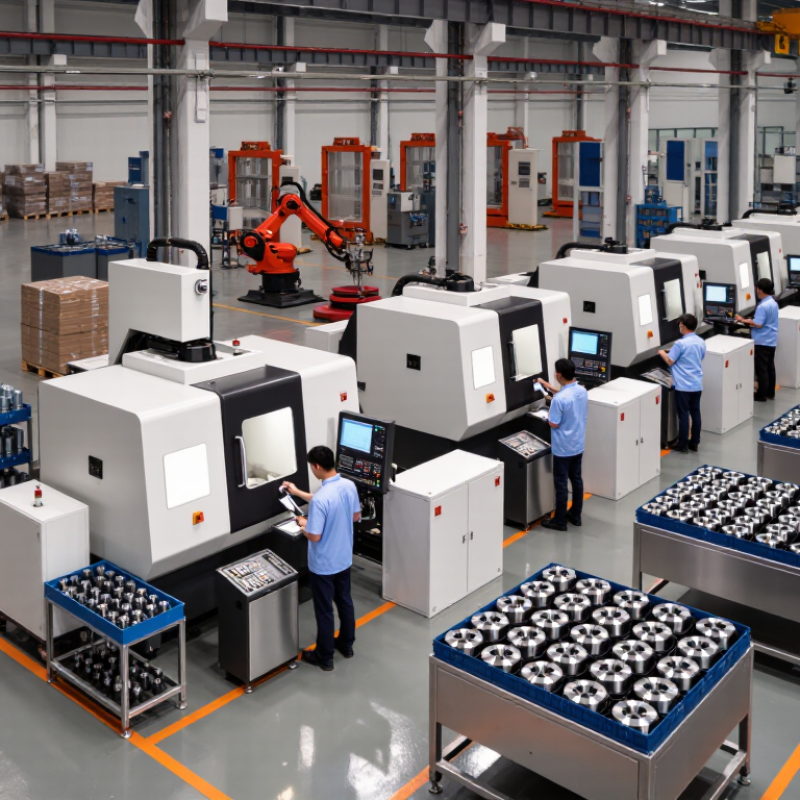
China Top 10 Acme Flange Nut Manufacturers?

What Are Acme Flange Nuts and Where Are They Used?

Acme flange nuts combine a trapezoidal Acme thread with an integrated load-spreading flange. The thread usually has a 29-degree included angle, according to ASME B1.5. This geometry supports smoother power transmission than many standard V-threads. The flange also reduces surface pressure beneath the nut. That matters on painted steel, aluminum frames, and slotted machine plates.

These nuts are used in lead screws, lifting tables, vises, linear actuators, and adjustable fixtures. A wide flange can limit local deformation when clamping force is high. In dusty workshops, the broader bearing surface may also improve stability. ISO 898-2 classifies mechanical properties for prevailing-torque and non-prevailing-torque nuts, helping engineers compare proof loads and hardness. However, Acme flange nuts are not automatically interchangeable. Pitch, diameter, clearance, and thread class still require measurement.

Market data shows why consistency matters. A 2024 Grand View Research assessment valued the global industrial fasteners market at more than 80 billion U.S. dollars in 2023, with machinery and transportation among major applications. That scale increases demand for traceable production and repeatable testing. In practice, inspect flange flatness, thread fit, coating thickness, and torque behavior. ASTM F606/F606M provides test methods for mechanical fasteners. One overlooked issue remains lubrication. It changes installation torque significantly. I have seen apparently strong assemblies loosen after poor surface preparation. The specification looked correct, but the installation evidence was weak.

How to Evaluate Acme Flange Nut Manufacturers in China

Choosing among China’s top 10 Acme flange nut manufacturers requires more than comparing prices or polished websites. A reliable supplier should explain thread standards, steel grades, heat treatment, and flange dimensions clearly. Ask for material certificates and production samples before approving a large order. Small details matter.

Inspect the factory’s quality process. Request thread-gauge records, hardness results, flange runout measurements, and torque-test data from recent batches. A useful supplier can link each carton to a production lot and inspection report. Check whether workers use calibrated tools, not only visual checks.

Production evidence speaks louder than promises. Short answers can be warning signs.

I also recommend a video audit or an in-person visit when possible. Examine storage conditions, packaging, corrosion protection, and rejected-part controls. Ask how the manufacturer handles dimensional failures and customer complaints.

In my sourcing experience, one supplier had excellent samples but inconsistent second-batch threads. That mistake was expensive. A written quality agreement could have reduced the risk.

No audit is flawless. Review communication speed, engineering support, delivery history, and willingness to admit limitations. Select the manufacturer that provides repeatable evidence, not the one offering the lowest quotation.

China’s Top 10 Acme Flange Nut Manufacturers

China’s top 10 Acme flange nut manufacturers are often judged by thread accuracy, flange stability, and production consistency. These suppliers typically serve machinery, lifting equipment, automotive systems, and industrial maintenance markets. Their workshops commonly use CNC turning, cold forming, thread rolling, and automated inspection lines. Each process leaves different evidence.

A reliable manufacturer should provide material certificates, dimensional reports, and batch traceability. Look for carbon steel, alloy steel, or stainless steel options matched to the working environment. Zinc plating may support basic corrosion resistance, while specialized coatings suit harsher conditions. Inspect the Acme thread profile carefully. A small pitch error can create poor engagement, vibration, or uneven load transfer. Flatness also matters because the flange distributes pressure against the mating surface.

The strongest Chinese suppliers usually control tooling, heat treatment, and final inspection in-house. Ask about sampling frequency, gauge calibration, and minimum order quantities. A practical audit should review several production batches, not one attractive sample. Packaging deserves attention too; mixed sizes can cause costly installation mistakes. I would avoid choosing from a ranking alone. Factory capacity can look impressive, yet delivery control may remain weak. Even experienced buyers sometimes overlook washer compatibility. That detail deserves another check. Real performance depends on design, material, machining quality, and honest communication.

China’s Acme Flange Nut Manufacturing: Technical Benchmark

This chart presents measurable product and process benchmarks commonly used when evaluating Acme flange nut manufacturers in China. It focuses on technical characteristics rather than company or brand performance.

Reference points include the 29° included angle of Unified Acme threads, the 30° included angle of ISO metric trapezoidal threads, common flange-nut size coverage, and typical industrial inspection checkpoints. Actual specifications should be confirmed against the applicable drawing and standard.

Manufacturing Standards, Materials, and Quality Control

China’s top flange nut manufacturers typically work against GB/T, ISO, ASTM, or customer-specific specifications. A reliable supplier should state the exact standard, thread class, flange diameter, and tolerance before production begins. Vague claims about “international quality” are not enough. Buyers need controlled drawings and measurable acceptance criteria.

Material selection depends on load, temperature, corrosion exposure, and installation conditions. Carbon steel suits many general applications, while stainless steel offers better corrosion resistance. Alloy steel may support higher strength requirements. Surface treatments, such as zinc coating, must be checked for thickness, adhesion, and consistency. Incoming inspection should verify chemical composition, dimensions, and surface condition. Small details matter.

During production, thread gauges, optical tools, hardness testers, and torque checks help identify defects. Lot numbers should connect raw material certificates with inspection records. Sampling plans can reduce waste, but critical dimensions may require full inspection. A certificate alone is not proof. Some factories still rely too heavily on visual checks, especially when output pressure rises. That weakness deserves attention. Experienced quality teams review rejected parts, adjust forming tools, and repeat tests after corrective action. I would also request sample approval, process photographs, and independent test results for demanding projects. Even a strong supplier can miss a problem when records are incomplete or inspection equipment is poorly calibrated.

China Top 10 Acme Flange Nut Manufacturers? - Manufacturing Standards, Materials, and Quality Control

Anonymized comparison of representative Chinese manufacturing capability profiles for Acme-thread flange nuts.

No. Anonymous Manufacturer Profile Typical Nut Configuration Common Materials Applicable Standards Typical Size Range Manufacturing Process Quality-Control Practices Typical Inspection Records
1 Profile A — Precision CNC and Cold-Forming Facility Hexagonal flange nut with plain or serrated bearing flange; internal Acme thread manufactured to customer drawing. Carbon steel Alloy steel 304 stainless steel ASME B18.2.2; ASME B1.5 for Acme thread geometry; ASTM A563 or ASTM F594 where applicable. M6–M24; custom larger sizes subject to tooling and machine capacity. Cold heading for standard blanks, CNC turning for special geometry, tapping or thread milling, and controlled heat treatment for high-strength grades. Thread plug gauges, flange diameter checks, hardness testing, dimensional sampling, and final visual inspection. Material certificate, dimensional inspection report, hardness report, and coating certificate when specified.
2 Profile B — High-Volume Automotive Fastener Plant Stamped or cold-forged hex flange nut, normally produced with a non-serrated flange unless a locking feature is requested. Low-carbon steel Medium-carbon steel 10B21 steel ISO 4161 for hexagon nuts with flange; ISO 898-2 for mechanical properties of carbon-steel and alloy-steel nuts. M5–M16; standard automotive and machinery sizes. Multi-station cold forging, automatic tapping, heat treatment, vibratory cleaning, and batch coating. Automatic optical sorting, torque-tension testing when required, thread gauging, hardness checks, and lot traceability. Process-control plan, lot inspection report, heat-treatment records, and statistical process-control data.
3 Profile C — Stainless-Steel Specialist Corrosion-resistant flange nut with plain flange; Acme thread profile checked against the approved engineering drawing. 304 / 304L stainless steel 316 / 316L stainless steel ASTM F594 for stainless-steel nuts; ISO 3506-2 where the specified stainless fastener property class is applicable. M4–M20; larger sizes generally machined rather than cold formed. Cold forming or bar machining, thread tapping, deburring, passivation, and cleaning for contamination control. Positive-material identification when requested, thread inspection, surface examination, dimensional inspection, and passivation verification. Mill test certificate, PMI report when ordered, passivation record, and dimensional report.
4 Profile D — Heavy-Equipment and Industrial Nut Producer Heavy hex flange nut with enlarged bearing surface for machinery, actuators, and structural equipment. Grade 8 carbon steel Alloy steel 42CrMo or equivalent ASTM A563 for carbon and alloy steel nuts; ASME B18.2.2 for inch-series dimensions where applicable. M12–M36; custom sizes available by drawing and production agreement. Hot forging or closed-die forging, CNC finishing, heat treatment, thread production, and surface treatment. Hardness testing, proof-load testing, dimensional inspection, magnetic-particle testing for selected parts, and batch traceability. Forging batch record, heat-treatment chart, mechanical test report, dimensional report, and non-destructive test report when specified.
5 Profile E — Export-Oriented Standard Fastener Manufacturer Metric hex flange nut, plain or serrated, adapted for Acme-thread applications according to customer specifications. Class 8 steel Class 10 steel Zinc-coated steel ISO 4161; ISO 898-2; ISO 4042 for electroplated coating systems where specified. M6–M24; metric production tooling commonly used. Cold heading, tapping, heat treatment, zinc electroplating or other specified finishing, and automated packaging. Gauge inspection, coating-thickness measurement, salt-spray testing by agreement, torque testing, and packaging inspection. Certificate of conformity, plating certificate, salt-spray report when ordered, and pre-shipment inspection report.
6 Profile F — Custom Machined Components Workshop Special-profile flange nut with non-standard flange diameter, keyways, counterbores, or customized Acme thread dimensions. 4140 alloy steel 17-4 PH stainless steel Brass Customer drawing is controlling; ASME B1.5 may be used as the reference for general-purpose Acme thread geometry. Typically M10–M50 or equivalent inch dimensions, subject to machine capacity. CNC turning, milling, thread milling, heat treatment, grinding, and optional surface finishing. Coordinate-measuring-machine inspection, optical measurement, thread profile verification, concentricity checks, and hardness testing. First-article inspection report, material certificate, CMM report, and revision-controlled inspection plan.
7 Profile G — Anti-Corrosion Coating Facility Steel flange nut supplied with corrosion-protection systems for outdoor machinery and general industrial equipment. Carbon steel Alloy steel Stainless steel ISO 10683 for non-electrolytically applied zinc-flake coatings; ISO 4042 for electroplated coatings where applicable. M6–M24 for standard lines; larger sizes may require rack or batch processing. Cold forming or machining, alkaline cleaning, coating application, controlled curing, and post-coating thread inspection. Coating-thickness measurement, adhesion checks, visual inspection, coefficient-of-friction testing when required, and salt-spray testing. Coating batch certificate, thickness map, corrosion-test report, and certificate of conformity.
8 Profile H — Small-Batch Engineering Supplier Low-volume flange nut production for prototypes, replacement parts, test fixtures, and special-purpose linear-motion assemblies. 304 stainless steel 316 stainless steel Aluminum bronze Part drawing and purchase specification; ASME B1.5 or another specified thread standard used as the design reference. Typically M8–M30; prototype and replacement dimensions produced by drawing. CNC turning, internal threading, milling of flange features, deburring, and optional heat or surface treatment. 100% dimensional inspection for critical features, thread-form verification, surface-finish measurement, and sample functional testing. Inspection checklist, material certificate, sample approval record, and functional fit report.
9 Profile I — Automated Sorting and Assembly Supplier Standard flange nut supplied for automated assembly lines, with emphasis on consistent geometry and defect detection. Carbon steel Alloy steel Stainless steel ISO 4161; ISO 898-2 or ISO 3506-2 according to material and property class; customer-specific inspection criteria. M5–M20; high-volume standard sizes. Cold forging, automatic tapping, heat treatment, surface finishing, camera inspection, and counting or kitting. 100% optical inspection for missing flange, damaged threads, incorrect dimensions, surface defects, and mixed parts. Inspection-system verification record, lot traceability, statistical reports, and packaging identification record.
10 Profile J — Precision Motion and Actuator Component Supplier High-precision flange nut for lead-screw or actuator assemblies; anti-backlash or preload features may be added by drawing. Alloy steel Tool steel Phosphor bronze Acme thread geometry verified to the customer drawing and ASME B1.5 reference requirements; material requirements specified by purchase order. Commonly ½–2 in or equivalent metric dimensions; application-specific sizes available. CNC machining, precision thread milling, lapping or fitting, heat treatment where required, and controlled assembly. Lead and pitch measurement, thread flank inspection, runout measurement, surface-finish checks, and functional load testing. Dimensional report, thread measurement chart, material certificate, functional test record, and final acceptance report.
Note: The entries are anonymized capability profiles rather than named companies or brands. Standards and material designations are genuine industry references; actual compliance, dimensions, coatings, and test results should be confirmed through the supplier’s current technical documents and inspection records.

How to Select the Right Chinese Manufacturer for Your Needs

When selecting a Chinese manufacturer for Acme flange nuts, begin with engineering evidence, not a polished catalog. Request drawings, material grades, thread tolerances, flange diameter, and torque requirements. For metric parts, confirm the exact standard and thread pitch. Small differences matter.

Ask whether production uses cold heading, controlled heat treatment, and calibrated thread gauges. An experienced supplier should explain its process without hiding behind general quality claims. Review ISO 9001 certification, but treat certification as a starting point, not proof of every result. Request recent inspection reports, coating thickness records, hardness data, and samples marked with traceable batch numbers.

Factory visits can reveal useful details. Check storage conditions, machine maintenance, laboratory equipment, and how rejected parts are separated. A clean showroom is not enough. Send the same drawing to several shortlisted manufacturers and compare their questions. The strongest supplier may ask about installation torque, vibration exposure, corrosion conditions, and annual demand. That shows practical understanding.

Before approving mass production, order a small trial batch. Test thread fit with calibrated gauges and check flange contact on the actual mating component. Confirm packaging, labeling, lead time, and corrective-action procedures in writing. A low quotation can hide expensive rework. I have seen sourcing teams focus too heavily on unit price and overlook inconsistent plating. That mistake is easy to make, especially when samples look perfect. Supplier performance should be reviewed after delivery, not only during selection.

We Meet Our Clients Needs.

Meeting the diverse needs of our clients, we have complete machining facilities for everything from single part prototypes to large quantity production. Our small size is one of our biggest assets. It allows us to control costs and maintain the highest of standards.

Quality orientated  and delivery always on time or earlier than originally promised.

Strongly recommend MSD.