
Why Is a Mud Pump Pulsation Dampener Important?
A Mud Pump Pulsation Dampener is a small component with a large influence on drilling performance. It reduces pressure fluctuations created by the mud pump’s reciprocating pistons. Without effective damping, the discharge line can vibrate, pressure gauges can jump, and sensitive equipment may experience unnecessary stress. The effects are visible. Clamps rattle. Hoses move. Readings become harder to trust.
Drilling hydraulics author Bill Mitchell describes the principle clearly: “A pulsation dampener smooths the pressure pulses produced by the mud pump.” This statement reflects a practical limitation. The device does not eliminate pulsation completely. It manages the energy before that energy travels through the high-pressure system. Correct precharge, suitable bladder condition, and proper sizing determine whether it performs reliably.
During field inspections, engineers should check for leaking gas, damaged valves, abnormal temperature, and unstable pressure response. They should also compare the dampener’s specifications with pump speed, liner size, fluid density, and operating pressure. A neglected unit may look acceptable externally while losing its protective function internally.
The benefit is not merely smoother instrumentation. A properly maintained Mud Pump Pulsation Dampener can reduce fatigue on discharge piping, improve pressure control, and support steadier drilling conditions. Yet assumptions create risk. One dampener setting cannot suit every rig or mud program. Actual performance depends on installation quality and changing operating conditions.
Small device. Serious consequences.
That is why this article examines its working principle, maintenance requirements, sizing considerations, and practical warning signs. Some recommendations appear obvious. Field experience proves they are still missed.
What Is a Mud Pump Pulsation Dampener?
Why Is a Mud Pump Pulsation Dampener Important?
What Is a Mud Pump Pulsation Dampener?
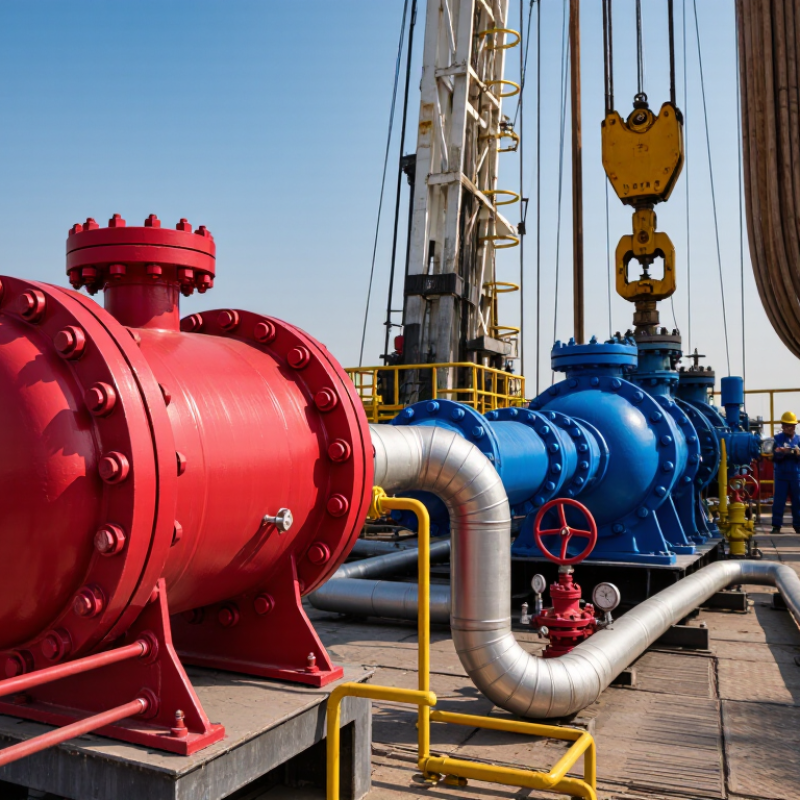
A mud pump pulsation dampener is a pressure-smoothing chamber installed near the pump discharge. It usually contains compressed gas behind a flexible diaphragm or bladder. As each piston stroke creates a pressure surge, the gas compresses and absorbs part of that energy. During the lower-pressure part of the stroke, it releases energy back into the fluid stream.
This process helps create steadier drilling-fluid flow. Typical triplex mud pumps operate around 40 to 120 strokes per minute, while some systems reach discharge pressures near 7,500 psi. At these conditions, repeated pressure peaks can stress valves, liners, fittings, standpipe components, and measurement instruments. API Specification 7K addresses pressure-containing equipment used with drilling systems, while the IADC Drilling Manual describes pulsation control as an important part of pump-system design. Field readings still may look uneven. A dampener is not magic.
Tips: Check the pre-charge before critical operations. Use the manufacturer’s specified gas pressure, inspect the bladder for damage, and compare discharge-pressure trends over time. A sudden change can indicate incorrect pre-charge, valve wear, gas loss, or restricted flow. Do not judge performance from one gauge alone. Pressure sensors, pump-stroke data, and maintenance records should be reviewed together. In my experience, small installation errors can undermine an otherwise suitable dampener. That detail deserves more attention.
Why Is a Mud Pump Pulsation Dampener Important?
A mud pump pulsation dampener absorbs pressure peaks and releases stored energy during low-flow portions of the pumping cycle. This helps stabilize discharge pressure, reduce vibration, and protect the fluid-end and surface equipment.
Representative discharge-pressure ripple values for a triplex reciprocating mud pump. Actual results vary with pump speed, fluid properties, dampener pre-charge, and discharge pressure.
How Does a Pulsation Dampener Work?
A mud pump pulsation dampener works as a flexible pressure buffer on the discharge line. A gas chamber, usually charged with nitrogen, sits behind a diaphragm or bladder. When the pump piston raises pressure, the diaphragm moves and compresses the gas. When pressure falls, the gas expands and pushes fluid back into the flow path. This repeated movement softens pressure peaks between piston strokes.
The result is a steadier discharge flow. It can reduce pipe vibration, gauge movement, and stress on valves, fittings, and other equipment. However, the dampener does not remove every pressure pulse. Its performance depends on correct sizing, gas precharge, diaphragm condition, and pump speed. In field maintenance, a technician should check these factors before blaming the dampener. I have found that small precharge errors can create surprisingly large vibration changes.
Tips: Check the precharge only with approved equipment and safe isolation procedures. Follow the equipment manufacturer’s pressure range, because one setting cannot suit every pump. Inspect the diaphragm for wear, cracking, or fluid damage during planned maintenance. A pressure gauge that suddenly fluctuates may indicate gas loss, internal damage, or an incorrect setting. Record readings during normal operation. That record makes gradual changes easier to identify, although real field conditions are rarely perfect. A dampener should support a balanced pumping system, not hide problems caused by worn valves, unstable suction, or poor maintenance.
Why Is a Mud Pump Pulsation Dampener Important? - How Does a Pulsation Dampener Work?
| Data Dimension | Typical Condition or Value | How the Pulsation Dampener Works | Practical Importance |
|---|---|---|---|
| Pump flow pattern | Positive-displacement mud pumps deliver flow in repeated strokes rather than as a perfectly continuous stream. | A gas-charged chamber provides a compressible volume that absorbs part of each pressure peak and releases fluid between peaks. | The discharge flow becomes smoother, reducing pressure cycling in the discharge line and downstream equipment. |
| Main energy-storage medium | Usually compressed nitrogen separated from the mud by a bladder, diaphragm, or piston. | Nitrogen compresses when discharge pressure rises and expands when pressure falls. This stores and returns hydraulic energy during every pumping cycle. | Gas separation prevents direct contact between the compressible gas and drilling fluid, helping preserve damping performance. |
| Installation location | Normally installed on or very close to the pump discharge manifold. | Positioning the dampener near the source of pulsation allows it to respond before pressure waves travel through the discharge piping. | Correct placement improves pressure-wave control and reduces the risk of vibration and fatigue in the piping system. |
| Pressure fluctuation | The unassisted fluctuation depends on pump geometry, stroke rate, liner size, valve condition, fluid properties, and piping design. | The gas volume acts as a hydraulic cushion and attenuates the amplitude of periodic pressure pulses. | Lower pressure variation supports more stable drilling parameters and reduces cyclic loading on valves, fittings, hoses, and instruments. |
| Pump stroke rate | Pulsation frequency increases as pump strokes per minute increase. A multi-cylinder pump produces several flow pulses per revolution. | The dampener must be sized and charged so its response is suitable for the pump’s operating frequency range. | Proper frequency matching helps prevent ineffective damping or amplification caused by unsuitable system dynamics. |
| Precharge pressure | Set according to the dampener design, operating pressure, fluid service, and manufacturer’s procedure; it is not a universal fixed value. | Precharge determines how readily the gas chamber compresses during normal pump operation. | Incorrect precharge can reduce damping effectiveness, overstress the bladder or diaphragm, and shorten component life. |
| Pressure rating | The pressure rating must equal or exceed the maximum allowable working pressure of the connected discharge system. | The pressure-containing shell and internal separator withstand repeated pressure cycles while the gas chamber performs the damping function. | Correct rating is essential for safe operation under normal pressure, surge pressure, and shutdown conditions. |
| Effect on discharge piping | Discharge piping is exposed to repeated pressure cycles, vibration, and mechanical loads from pulsating flow. | The dampener absorbs a portion of the cyclic hydraulic energy before it reaches the pipe network. | It can help reduce fatigue damage, connection loosening, vibration, and premature failure of high-pressure components. |
| Effect on measurement and control | Pressure sensors and control systems can receive rapidly fluctuating signals from a reciprocating pump. | Smoothing the pressure signal reduces the amplitude and severity of short-duration pressure spikes. | More stable readings improve monitoring, alarm management, and adjustment of drilling fluid parameters. |
| Fluid compatibility | Drilling mud may contain water, oil, solids, polymers, salts, and chemical additives. | The wetted materials and elastomer separator must resist the chemical and abrasive conditions of the mud. | Material compatibility helps prevent swelling, cracking, erosion, leakage, and premature separator failure. |
| Maintenance checks | Check precharge, leakage, shell condition, mounting, isolation valves, and pressure-indication devices at scheduled intervals. | Maintenance confirms that the gas chamber remains charged and that the separator and pressure boundary are intact. | Regular inspection helps identify loss of precharge, gas leakage, separator damage, and unsafe operating conditions before failure. |
| Failure indicators | Increasing discharge vibration, unstable pressure readings, abnormal noise, frequent fitting failures, or visible leakage. | These symptoms may indicate inadequate precharge, a damaged separator, incorrect sizing, blocked connections, or excessive pump pulsation. | Prompt inspection can prevent secondary damage to the pump, discharge line, pressure-control equipment, and drilling-fluid circulation system. |
Why Does Mud Pump Pressure Pulsate?
Why Is a Mud Pump Pulsation Dampener Important?
Why Does Mud Pump Pressure Pulsate?
Mud pump pressure pulsates because the pump moves drilling fluid in separate piston strokes. Each piston creates a pressure wave as it discharges fluid, rather than producing a perfectly steady flow. Suction and discharge valves also open and close rapidly. Their timing can make the pressure peaks sharper.
Fluid compressibility adds another factor. Entrained air, worn valves, damaged liners, or an uneven suction supply can increase pressure variation. A blocked suction strainer may cause the gauge needle to swing visibly. Poor precharge in the dampener can make the problem worse.
A pulsation dampener uses a gas-charged chamber to absorb part of each pressure surge. This smooths the flow through the discharge line and reduces stress on hoses, fittings, gauges, and other pressure-sensitive equipment. It also helps maintain more stable hydraulic conditions at the well.
The dampener is not a cure for every pressure problem. Field checks should include valve condition, suction pressure, liner wear, and gas precharge. Small leaks matter. A pressure reading may look acceptable while the mechanical load keeps rising. That detail is easy to miss during a busy operation. Regular inspection remains essential, although maintenance teams sometimes rely too heavily on the gauge alone.
What Problems Does a Pulsation Dampener Prevent?
Why Is a Mud Pump Pulsation Dampener Important?
A mud pump pulsation dampener reduces pressure surges created by the pump’s reciprocating pistons. Without it, drilling fluid moves in uneven pulses through the discharge line. Those pulses can shake hoses, loosen fittings, and stress valves. Small vibrations become expensive failures over time.
What Problems Does a Pulsation Dampener Prevent?
It helps prevent discharge-line fatigue, pressure-gauge fluctuations, and premature seal damage. A smoother flow also improves pressure readings at the manifold, helping crews adjust drilling parameters with better confidence. In practical maintenance work, repeated vibration often appears as cracked supports, leaking connections, or unusual noise near the pump outlet. The dampener cannot remove every problem. Poor precharge, incorrect sizing, or a damaged bladder can reduce its value. This is where inspections matter.
A technician should check precharge according to the equipment design and operating conditions. The vessel, valves, and connections also need regular visual inspection. Never assume a quiet line is a healthy line. Some failures develop internally before obvious symptoms appear. I have seen maintenance teams focus on pump wear while overlooking pulsation control. That decision can distort pressure readings and shorten the life of nearby components. Yet the dampener is not magic. It works best when matched with proper alignment, secure piping, accurate gauges, and disciplined maintenance records.
How Is a Mud Pump Pulsation Dampener Maintained?
A mud pump pulsation dampener smooths pressure surges before they reach the discharge line. Its condition directly affects fluid flow, valves, gauges, and nearby piping. Maintenance should follow the equipment manual and site safety procedure. Record the dampener model, operating pressure, inspection date, and charging pressure. Small records prevent large mistakes.
Before opening the housing, stop the pump, isolate the system, and release all trapped pressure. Verify zero pressure with a reliable gauge. Then inspect the shell, flange, bolts, fittings, and pressure indicator for corrosion or leakage. Check the bladder or diaphragm for cracks, swelling, hardening, or chemical damage. Use only the specified charging gas and pressure. Oxygen is not acceptable. A trained technician should perform charging and internal repairs. Guessing the precharge value is a costly shortcut.
Watch the dampener during operation. Excessive vibration, irregular discharge pressure, knocking sounds, or frequent gauge movement may indicate a damaged bladder or incorrect precharge. Inspect sooner when these signs appear. Do not wait for a complete failure. Clean the surrounding area, but keep water and debris away from open ports. Replace seals and flexible parts with correctly rated components. Maintenance intervals should reflect pressure, fluid chemistry, temperature, and working hours. A fixed calendar alone can be misleading. One detail is often overlooked: after servicing, recheck every connection at low pressure before returning to full operation. Regular inspection is valuable, but careful verification matters more.
Article Source:
We Meet Our Clients Needs.
Meeting the diverse needs of our clients, we have complete machining facilities for everything from single part prototypes to large quantity production. Our small size is one of our biggest assets. It allows us to control costs and maintain the highest of standards.
Quality orientated and delivery always on time or earlier than originally promised.
Strongly recommend MSD.