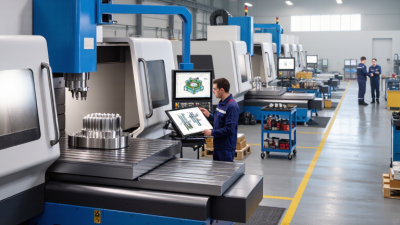
How to Find CNC Machining and Manufacturing Suppliers?
Finding a reliable cnc machining and manufacturing supplier can determine whether a product reaches customers smoothly or stalls during production. The search should begin with the part, not the supplier’s marketing language. Review the drawing, material grade, tolerance bands, surface finish, annual volume, and required delivery date. A supplier that understands these details can identify risks before quoting.
Taiichi Ohno, a major manufacturing authority, offered a useful principle: “Without standards, there can be no kaizen.” That idea applies directly to supplier selection. Ask for documented inspection methods, machine capabilities, calibration records, and examples of comparable work. Confirm whether the supplier performs first-article inspection and supports traceability. A polished website is not proof of production capability. A clear process is stronger evidence.
Request a detailed quotation. It should explain tooling, programming, setup, inspection, packaging, and lead time. If possible, begin with a small trial order. Examine the sample closely. Check dimensions, burrs, threads, finish, labeling, and packaging damage. Speak with the production team, not only the sales representative. Their answers often reveal how problems are handled.
No checklist is perfect. A supplier may pass every document review and still struggle with one difficult tolerance. That is why practical testing matters. Compare communication speed, technical questions, corrective actions, and consistency. The lowest price can become expensive after rework, delays, or rejected parts. The best cnc machining and manufacturing partner combines capability, transparency, stable quality, and realistic promises. Look beyond the quote. Examine the evidence.

Define Your CNC Machining and Manufacturing Requirements
Before contacting CNC machining suppliers, define what the part must do in its working environment. Record the material, dimensions, quantity, and expected service life. Include a clear 2D drawing and a usable 3D CAD file. Specify critical tolerances, surface finish, threads, holes, and edge requirements. A general tolerance note can prevent confusion, but it should not replace critical dimensions.
Think about production conditions, not only the first prototype. Will the part face heat, moisture, vibration, or repeated loads? State these details clearly. Choose materials based on performance, availability, and machining behavior. Aluminum, stainless steel, engineering plastics, and tool steel each create different tooling and finishing needs. Your supplier may also need information about inspection standards, packaging, and delivery frequency.
Requirements are rarely perfect at the beginning. Some tolerances may be tighter than necessary. I have seen drawings request extreme precision for hidden surfaces, increasing cost without improving function. Review every dimension with an engineer or experienced machinist. Ask whether the requirement protects performance or simply reflects an old assumption.
Tips: Mark critical features directly on the drawing. Separate functional tolerances from cosmetic preferences. Share the intended annual volume, not just the first order quantity. Request a manufacturability review before production. Leave room for feedback; a supplier may identify a simpler feature, a safer setup, or a more stable material choice.
Identify Suitable Supplier Types and Manufacturing Capabilities
Finding a suitable CNC supplier starts with identifying the supplier type, not comparing hourly rates. Prototype bureaus suit one-off parts and rapid design changes. Job shops handle mixed materials, tight tolerances, and small batches. Contract manufacturers fit repeat production, stable drawings, and scheduled demand. High-volume suppliers need automated cells, process control, and dependable material purchasing.
Match capabilities against the part’s actual risks. Check five-axis machining, turning, surface finishing, heat treatment, and inspection equipment. Ask for measured samples, not only equipment lists. A supplier may own advanced machines but lack experience with thin walls or deep cavities. Volume changes everything. Deloitte’s 2023 Smart Manufacturing and Operations Survey found that 86% of manufacturers expect smart manufacturing to remain a major competitiveness factor within five years. This supports evaluating digital scheduling, traceability, and machine data, even for conventional CNC work.
Quality evidence should be specific. Review calibration records, first-article reports, corrective-action history, and material certificates. ISO’s 2023 Survey recorded more than 1.2 million ISO 9001 certificates worldwide, but certification alone cannot prove process capability. Ask how the supplier controls a 0.02 mm tolerance across repeated batches. Request realistic lead-time assumptions, including programming and inspection. A low quotation can still be wrong. In supplier reviews, the weakest point is often my own incomplete brief. State the material grade, annual volume, tolerance priorities, finish requirements, packaging details, and acceptance method. Leave less room for interpretation.
Evaluate Supplier Experience, Equipment, Quality, and Certifications
How to Find CNC Machining and Manufacturing Suppliers?
Supplier experience should match your part’s material, tolerance, and production volume. Ask for examples of similar work, not general project photos. An experienced supplier can explain tool wear, surface finish, and common machining risks. During a factory visit, inspect machine condition, work instructions, and inspection areas. A clean floor helps, but it does not prove consistency. I have seen impressive workshops miss basic documentation.
Review the equipment list carefully. Confirm machine travel, spindle capability, automatic probing, and available inspection tools. Ask whether critical dimensions are checked during production or only before shipping. Reliable quality systems include calibrated equipment, inspection records, material certificates, and clear handling procedures. Certifications can support trust, but certificates alone cannot guarantee good parts. Verify their scope, issue date, and actual application. Request a sample inspection report with measured values and tolerances.
Tips: Start with a small trial order. Define drawings, materials, packaging, and acceptance criteria in writing. Ask how they handle nonconforming parts and delayed deliveries. A supplier who admits a process weakness may be more dependable than one promising perfection. Keep communication practical. Record every change. Do not ignore small warning signs, such as vague answers about measurement methods or repeated quotation changes.
How to Find CNC Machining and Manufacturing Suppliers?
Recommended evaluation weighting for supplier experience, equipment, quality, and certifications
This practical 100-point screening model prioritizes proven manufacturing experience, suitable CNC equipment, measurable quality control, and relevant certifications. Check capabilities such as multi-axis machining, CMM inspection, process traceability, ISO 9001 quality systems, and industry-specific certifications before requesting a quotation.
Evaluation framework: Experience 25%, Equipment Capability 25%, Quality Control 25%, Certifications and Compliance 15%, Communication and Delivery 10%.
Compare Quotations, Lead Times, Communication, and Production Terms
How to Find CNC Machining and Manufacturing Suppliers?
A reliable supplier should provide more than a low CNC machining quotation. Request itemized pricing for material, programming, setup, machining, inspection, and packaging. Compare each quote against the same drawing revision and tolerance requirements. A cheaper offer may exclude surface finishing or dimensional reports. I once accepted a low quote that omitted a critical inspection step. The final cost increased.
Lead time also needs careful review. Ask when production starts, not only when delivery is promised. Confirm material availability, sample approval, machining capacity, and inspection time. Communication quality matters during this stage. A professional supplier should answer technical questions clearly and identify risks early. Test this with a practical question about a thin wall, deep hole, or tight tolerance. Vague replies can create delays. Production terms deserve equal attention. Clarify payment stages, change control, rejected parts, rework, shipping responsibility, and documentation.
Tips: Send complete drawings and three-dimensional files. Mark critical dimensions clearly. Ask for a written production schedule. Request sample photos before full production when possible. Compare response speed and technical accuracy, not just price. Keep every agreement in writing. Some suppliers may promise confidently but provide limited evidence. Treat that as a warning, not a minor detail. My own comparison process still needs improvement, especially when urgent orders make careful review harder.
How to Find CNC Machining and Manufacturing Suppliers? - Compare Quotations, Lead Times, Communication, and Production Terms
Indicative comparison for a common RFQ: 100 CNC-milled aluminum parts, 6061-T6 material, 3-axis machining, general tolerance ±0.05 mm, deburred, and unfinished.
| Evaluation Area |
Supplier A |
Supplier B |
Supplier C |
Supplier D |
Supplier E |
| Supplier Type |
Local machine shop |
Specialized CNC manufacturer |
Job-shop network |
High-volume production shop |
Prototype and low-volume shop |
| Quoted Price for 100 Parts |
US$2,850 |
US$2,460 |
US$2,980 |
US$2,210 |
US$3,180 |
| Quote Validity |
30 days |
15 days |
30 days |
15 days |
30 days |
| Tooling or Setup Fee |
US$180 |
Included |
US$250 |
Included |
US$320 |
| First Article Lead Time |
7 business days |
5 business days |
8 business days |
6 business days |
4 business days |
| Production Lead Time After Approval |
15 business days |
12 business days |
18 business days |
10 business days |
14 business days |
| Estimated Total Delivery Time |
19–23 business days |
16–20 business days |
23–28 business days |
14–18 business days |
18–22 business days |
| Communication Response Time |
Within 1 business day |
Within 4 business hours |
Within 1–2 business days |
Within 8 business hours |
Within 2 business hours |
| Engineering Support |
DFM review included |
DFM review and tolerance consultation |
DFM review available at extra cost |
DFM review included for production orders |
DFM review included |
| Inspection Documentation |
Dimensional report included |
FAI report and material certificate |
Basic inspection report |
FAI report, material certificate, and process records |
Dimensional report included |
| Quality Control Method |
Calibrated gauges and CMM access |
In-process inspection and CMM |
Sampling inspection |
First-piece and statistical process checks |
100% critical-dimension inspection |
| Material Traceability |
Available on request |
Included |
Available with surcharge |
Included |
Included |
| Payment Terms |
50% deposit; balance before shipment |
30% deposit; balance after inspection |
50% deposit; balance before shipment |
30% deposit; balance after inspection |
50% deposit; balance before shipment |
| Order Quantity Flexibility |
Prototype to medium volume |
Low to high volume |
Prototype to medium volume |
Medium to high volume |
Prototype to low volume |
| Change Order Policy |
Changes accepted before material purchasing |
Engineering change approval required |
Changes repriced individually |
Changes accepted before production release |
Flexible changes during prototype stage |
| Warranty or Rework Terms |
Rework or replacement for verified defects |
Replacement for nonconforming parts within 30 days |
Case-by-case corrective action |
Replacement or credit for confirmed defects |
Rework discussed after inspection review |
| Best Fit |
Buyers needing local coordination |
Balanced cost, quality, and lead time |
Projects requiring flexible sourcing |
Cost-sensitive repeat production |
Fast prototypes and frequent design changes |
| Overall Evaluation |
Reliable local option |
Strong all-round candidate |
Flexible but slower |
Lowest quoted cost |
Fastest prototype support |
Note: Prices and schedules are indicative RFQ benchmarks for comparison only. Actual quotations depend on geometry, material availability, tolerances, surface finish, inspection requirements, shipping terms, order quantity, and production capacity.