10 Essential Tips for Choosing the Right Machine Tool in CNC Production?
Choosing the right machine tool in CNC production can significantly impact efficiency and product quality. Industry expert Dr. James Roberts once stated, “Precision in selection leads to precision in production.” This highlights the importance of making informed decisions when it comes to equipment.
In the competitive world of CNC machining, selecting the correct machine tool in CNC is crucial. There are a few essential factors to consider. Performance, durability, and cost-efficiency are among the top concerns for manufacturers. Failure to carefully assess these can lead to costly errors.
Moreover, understanding specific project needs can guide the selection. Each machine has its unique strengths. Ignoring these details may result in suboptimal choices. Mistakes often stem from rushing the decision-making process. A well-considered choice can enhance production outcomes and minimize wastage. Striving for excellence starts with the right tools.

Understanding the Basics of CNC Machine Tools and Their Functions
CNC machine tools play a crucial role in modern manufacturing. They automate processes, improving precision and efficiency. Research indicates that the global CNC machine tool market will reach $100 billion by 2025. This growth reflects the rising demand for high-quality manufacturing solutions.
When choosing machine tools, understanding their functions is vital. CNC lathes, mills, and routers cater to different tasks. For instance, lathes create cylindrical parts, while mills are better for complex shapes. However, selecting the wrong tool can lead to wasted resources and time. It’s essential to evaluate your specific production needs.
Moreover, training staff on these tools is often overlooked. A skilled operator can maximize a tool’s potential, while a poorly trained one may cause costly mistakes. Many companies report a knowledge gap, affecting productivity. Regular assessments of machinery and personnel can help bridge this gap. Investing in both machinery and training is critical for long-term success in CNC production.
Identifying Your Production Needs and Specific Requirements
When selecting a machine tool for CNC production, understanding your specific production needs is crucial. Every project has unique requirements. Consider the materials you work with. Different materials demand different types of machine tools. For instance, softer metals require different settings than harder ones. Assess your production volume too. High volume might need a more robust and automated machine.
Another tip is to think about your desired precision levels. Some applications require tighter tolerances. Others can manage with more flexibility. Think about how precise you need to be. Evaluate your workforce's skills as well. More advanced machinery may require specialized training. This could impact your production timeline and costs.
Don't forget maintenance and support. Some tools require frequent upkeep, while others are more forgiving. Reflect on your capacity to maintain equipment. If you're not ready for extensive maintenance, it might not be the right choice. Balancing performance with practicality is key in making the best decision.
Evaluating Different Types of CNC Machine Tools
Choosing the right CNC machine tool is crucial for efficiency. Evaluating different types can clarify which suits your needs best. For example, CNC lathes are excellent for cylindrical parts, while milling machines excel in shaping flat surfaces. According to industry reports, about 40% of manufacturers favor milling machines for versatility.
Another key aspect is assessing machine capabilities. Consider cutting speed, feed rate, and precision. Some reports indicate that high-speed machining can reduce production time by up to 30%. However, it comes with increased wear and tear. Regular maintenance becomes a must, potentially increasing operational costs.
Tooling also matters greatly. Tools compatible with your machine can significantly affect output quality. A mismatched tool could lead to defects. Inappropriate tool selection may increase the need for rework, thus impacting your overall efficiency. Finding a balance is essential; not all expensive tools guarantee superior performance. Reflect on your long-term production goals before making final choices.
Comparison of CNC Machine Tool Types
Considering Cost, Maintenance, and Support Options
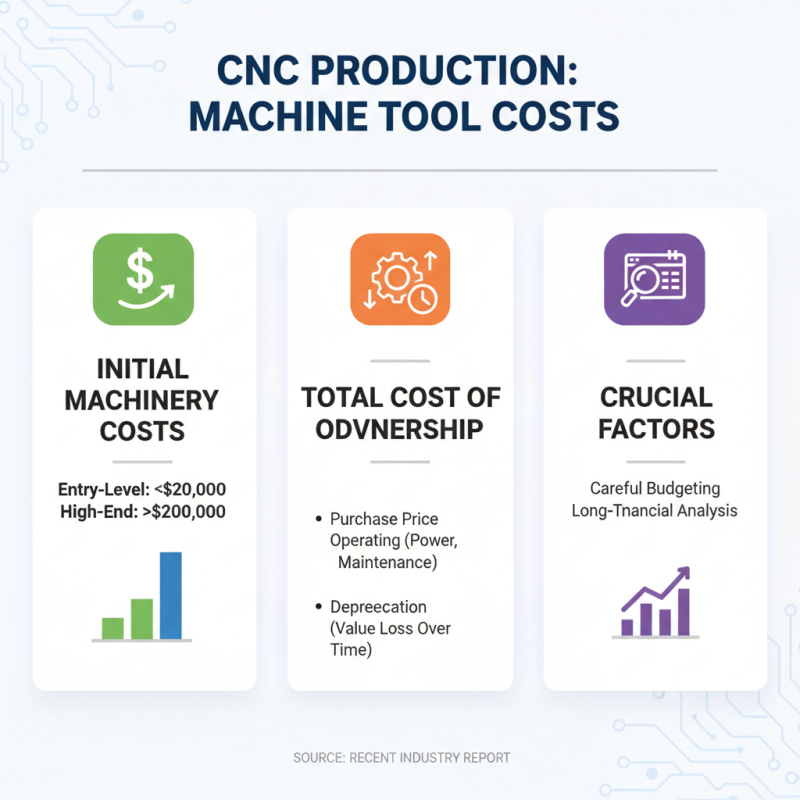
When selecting a machine tool for CNC production, cost is a crucial factor. According to a recent industry report, initial machinery costs can vary significantly. Entry-level CNC machines may start around $20,000, while high-end models can exceed $200,000. This wide range emphasizes the need for careful budgeting. Companies often overlook the total cost of ownership, which includes purchase price, operating costs, and depreciation. It’s vital to analyze these figures over time.
Maintenance options are equally important. Regular maintenance can prevent costly downtimes. A survey indicated that 30% of CNC users experience unexpected breakdowns that significantly affect production schedules. Businesses should consider warranty periods and availability of parts. A machine with limited support could lead to prolonged downtimes. Also, local support can be crucial. It’s often more efficient to work with service teams nearby. Thus, companies must weigh support options alongside the cost of the machine.
Evaluating these factors can be daunting. Many companies focus too heavily on upfront costs. By doing so, they may ignore long-term implications. A comprehensive approach considers both immediate and future needs. Investing time in research can prevent hasty decisions that lead to regret later. Balancing cost, maintenance, and support ensures better alignment with production goals.
Reviewing Manufacturer Reputation and Customer Feedback
When selecting a machine tool for CNC production, understanding manufacturer reputation is crucial. Companies with a long-standing history typically offer reliability. Look for those that have consistently delivered quality products over time. Customer feedback can shine a light on real-world performance. Positive reviews often highlight precision and durability, while negative ones may point to issues like poor service or inconsistent performance.
Direct feedback is invaluable. Engage with user forums or online reviews to grasp the nuances of a machine's performance. Some users report challenges with maintenance or support availability. Consider these insights as vital data points in your decision-making process. Manufacturers that respond to feedback demonstrate their commitment to improvement. Sometimes, overly polished marketing can mask underlying issues. Trustworthy information rarely comes from glossy brochures. Always seek authentic user experiences to inform your choices.
Related Posts
-
2025 How to Optimize CNC Machine Design for Maximum Efficiency and Performance
-
10 Essential Tips for Choosing the Right Machine Tool in CNC
-

10 Essential Tips for Effective CNC Machine Design Strategies?
-
5 Ways CNC Machining and Manufacturing Transforms Your Production Process
-
Top 10 CNC Machine Tools Every Engineer Should Know in 2023
-

How to Improve Efficiency in Machine Manufacturing Processes?
We Meet Our Clients Needs.
Meeting the diverse needs of our clients, we have complete machining facilities for everything from single part prototypes to large quantity production. Our small size is one of our biggest assets. It allows us to control costs and maintain the highest of standards.
Quality orientated and delivery always on time or earlier than originally promised.
Strongly recommend MSD.