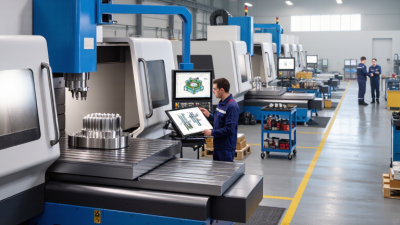
What Is CNC Machining and Manufacturing?
CNC machining and manufacturing uses computer-controlled equipment to shape metal, plastic, wood, and composite materials. CNC means computer numerical control. A digital design guides cutting tools, spindles, drills, or lathes with repeatable movements. The result may be a small aluminum bracket, a medical device housing, or a complex aerospace component.
The process usually begins with a CAD model and manufacturing plan. Engineers select tools, cutting speeds, feeds, workholding methods, and suitable materials. CAM software then converts design data into machine instructions. During production, operators inspect tool wear, surface finish, dimensions, and machine alignment. A micrometer may verify a shaft within a few hundredths of a millimeter. That small difference can affect assembly, sealing, or safety.
Precision is only part of the story. Good CNC machining and manufacturing also depends on design judgment, material knowledge, inspection discipline, and clear communication. Experienced teams review tolerances before cutting begins. They also consider heat, vibration, chip removal, and production costs. No process is flawless. A perfect digital model cannot correct a weak fixture or poorly chosen tool. Some designs look impressive but remain difficult to machine efficiently. This is where practical experience matters. Reliable manufacturers document measurements, confirm specifications, and improve programs after testing. Readers should also question broad claims about speed, accuracy, and savings. Real performance depends on the machine, material, geometry, and operator. Understanding these limits makes CNC technology easier to evaluate and use responsibly.
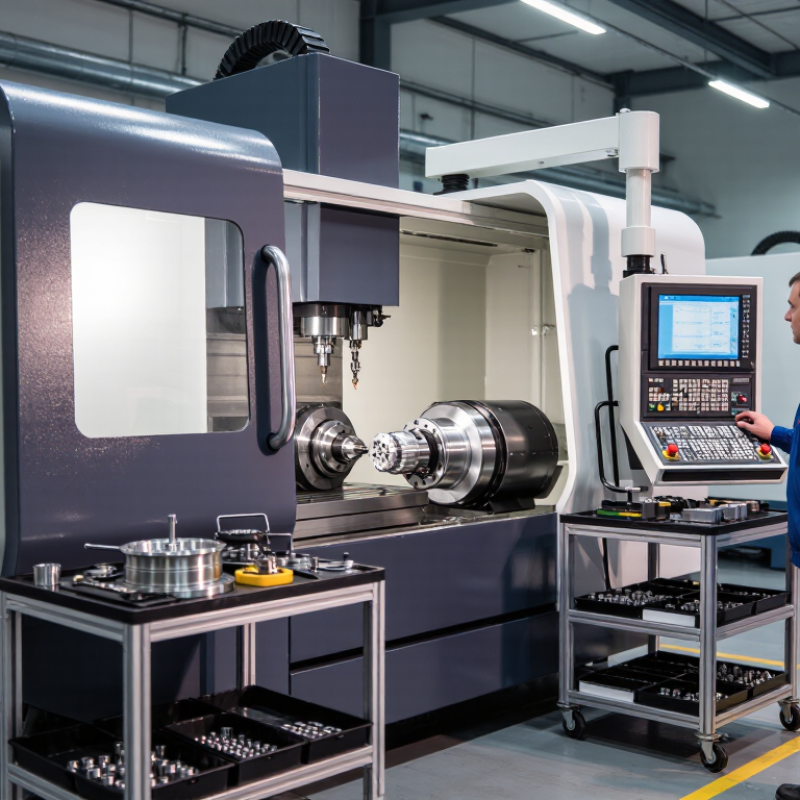
What CNC Machining and Manufacturing Mean
CNC machining means removing or shaping material with computer-controlled equipment. CNC stands for computer numerical control. A digital drawing guides cutting tools along programmed paths. Manufacturing is the wider process, including design, material selection, machining, inspection, and assembly. CNC machining is one important part of manufacturing, not the whole operation.
In a practical workshop, an operator may secure an aluminum block, set the tool offset, and check the first part with measuring equipment. The machine can produce complex holes, pockets, threads, and curved surfaces with consistent accuracy. However, the code is not automatically perfect. A small programming error can damage a tool or create an unusable part. Small errors matter. Skilled workers review drawings, confirm tolerances, and watch for vibration, heat, and unusual tool wear. Experience remains valuable, especially when a material behaves differently than expected.
Tips: Define critical dimensions clearly before production. Choose materials based on strength, temperature, corrosion, and finishing needs. Leave enough access for cutting tools. Ask for a prototype when the design has uncertain features. Inspect the first completed part carefully. Do not assume a digital model guarantees a perfect result.
What Is CNC Machining and Manufacturing?
CNC machining is a computer-controlled manufacturing method in which cutting tools remove material from a workpiece to create precise parts. The chart shows the ISO 2768-m general linear tolerance values commonly used when no individual tolerance is specified. Smaller values indicate tighter dimensional control.
Tolerance values are shown as plus or minus millimeters and depend on the nominal dimension range. Critical features normally require individually specified tolerances.
How CNC Machines Control Tools and Production Processes
CNC machining converts digital design files into controlled tool movements. A controller reads coded instructions, then guides axes, spindles, drills, and cutting tools. Operators set work coordinates, cutting speeds, feed rates, and tool offsets before production begins. A small offset can leave a visible line on an aluminum surface.
Sensors and probing systems help verify position during production. The machine can measure a workpiece, adjust coordinates, and detect certain process changes. However, automation does not remove human judgment. Tool wear, vibration, heat, and material variation still influence accuracy. The process is not flawless.
Grand View Research estimated the global CNC machine market at USD 88.5 billion in 2023. Its report forecasts an 8.5% compound annual growth rate through 2030. Deloitte’s 2024 Smart Manufacturing and Operations Survey found that 86% of manufacturers expect smart manufacturing to drive competitiveness within five years. These figures reflect rising investment in connected production controls.
In a practical workshop, control begins before cutting. Engineers simulate toolpaths, check collision risks, and select suitable workholding. During machining, operators compare measured parts against engineering tolerances. ISO 230-2 provides methods for testing positioning accuracy and repeatability. Yet a perfect test result cannot guarantee every production run. That limitation deserves regular review.
| Manufacturing Dimension | CNC Element or Process | Typical Data or Specification | How It Works | Production Impact |
|---|---|---|---|---|
| Manufacturing Method | Computer Numerical Control | Machines follow digitally coded instructions, commonly generated from CAD and CAM software. | The controller converts programmed coordinates, speeds, and commands into coordinated machine movements. | Improves repeatability and reduces manual tool-positioning errors. |
| Machine Movement | Linear axes | Three-axis machining uses X, Y, and Z movement; additional rotary axes may be added for multi-sided work. | X and Y generally control movement across the work surface, while Z controls tool height or cutting depth. | More axes can reduce repositioning and enable access to complex surfaces. |
| Tool Control | Spindle rotation | Typical cutting speeds range from several hundred to several thousand revolutions per minute, depending on the tool, material, and operation. | The spindle rotates the cutting tool or workpiece while the programmed feed motion creates the required geometry. | Correct speed helps balance cutting performance, surface quality, tool life, and heat generation. |
| Tool Motion | Feed rate | Feed rate is specified as distance per minute or distance per tooth and varies with material, cutter size, and tool geometry. | The controller moves the tool through the material at a programmed rate while maintaining the selected cutting path. | Excessive feed may damage the tool or workpiece; insufficient feed may increase heat and reduce productivity. |
| Material Removal | Cutting depth and width | Roughing commonly removes larger amounts of material, while finishing uses lighter cuts for improved dimensional control. | Material is removed in successive passes until the programmed shape and dimensions are reached. | Separating roughing and finishing can improve cycle time, tool life, and surface finish. |
| Workpiece Materials | Metals, plastics, and composites | Common material groups include aluminum alloys, steels, stainless steels, brass, engineering plastics, and selected composites. | Cutting parameters and tooling are selected according to hardness, thermal behavior, abrasiveness, and rigidity. | Material properties directly influence tool selection, machining time, coolant requirements, and achievable finish. |
| Programming | G-code and machine instructions | Programs define coordinates, tool changes, spindle speed, feed rate, coolant commands, and machining cycles. | The controller reads commands sequentially and synchronizes axis motion with spindle and auxiliary functions. | Standardized instructions support repeatable production and easier process documentation. |
| Workholding | Fixture, vise, or chuck | The workpiece must be located and clamped securely before machining begins. | Workholding establishes a repeatable reference position and resists cutting forces and vibration. | Stable fixturing supports dimensional accuracy, consistent setup, and safer operation. |
| Coordinate System | Machine zero and work offset | A work offset defines the programmed origin relative to the physical workpiece. | The controller translates programmed coordinates into machine movements based on the selected offset. | Accurate setup prevents location errors and allows the same program to be used across repeat jobs. |
| Production Accuracy | Dimensional tolerance | Typical general CNC tolerances may range from approximately ±0.05 mm to ±0.10 mm, depending on the machine, material, geometry, and process. | Accuracy is influenced by machine calibration, thermal conditions, tool deflection, workholding, and inspection methods. | Tighter tolerances generally require more controlled processes, inspection, and finishing operations. |
| Surface Quality | Surface roughness | Machined surfaces may commonly achieve approximately Ra 1.6–6.3 µm, depending on tooling, feed, rigidity, and finishing strategy. | Finishing passes, smaller feeds, suitable tools, and stable cutting conditions improve the surface texture. | Surface requirements affect cycle time, tool selection, post-processing, and functional performance. |
| Process Stages | Design, programming, setup, machining, and inspection | A typical workflow includes CAD design, CAM toolpath creation, machine setup, material removal, and quality verification. | Each stage transfers manufacturing information to the next stage through digital files, machine settings, and inspection results. | A documented workflow reduces setup variation and supports efficient production planning. |
| Tool Management | Automatic tool changer | Many machining centers store multiple tools and change them automatically during a programmed cycle. | The controller calls the required tool and coordinates the change with spindle and program commands. | Automatic changes reduce manual intervention and enable multiple operations in one setup. |
| Cooling and Lubrication | Coolant or minimum-quantity lubrication | Cooling and lubrication methods are selected according to the material, cutting tool, heat generation, and environmental requirements. | They help control temperature, remove chips, and reduce friction between the tool and workpiece. | Proper application can extend tool life and improve surface quality, while excessive use increases handling and maintenance needs. |
| Quality Control | Inspection and verification | Measurements may include dimensions, position, surface finish, tool wear, and visual defects. | Inspection tools compare the finished part with engineering drawings, models, or specified tolerances. | Verification confirms whether the machining process consistently produces conforming parts. |
| Production Volume | Prototype, small-batch, and repeat production | CNC machining can produce one-off parts as well as repeated batches when programs, tools, and setups are controlled. | Digital programs can be stored, adjusted, and reused for future production runs. | It provides flexibility for design changes while maintaining consistent manufacturing instructions. |
The Main Types of CNC Machines and Their Functions
What Is CNC Machining and Manufacturing?
CNC machining uses computer instructions to control cutting tools with repeatable accuracy. The main machine types differ by movement, tooling, and the shape of each workpiece.
CNC milling machines hold a part while rotating cutters remove material from several sides. They produce slots, pockets, holes, and angled surfaces. Three-axis mills suit many standard parts, while four- and five-axis machines reach complex features with fewer setups. CNC turning machines rotate the workpiece against a fixed cutting tool. They make shafts, bushings, threads, and other round components. A clean chip flow and stable workholding matter greatly during turning.
CNC routers usually cut wood, plastics, foam, and thin composite sheets. Their large tables support panels and signs, although they may lack the rigidity needed for hard metals. Electrical discharge machines remove conductive material through controlled electrical sparks. They can create narrow slots and intricate cavities after conventional cutting becomes difficult. Laser and plasma cutters follow programmed paths to separate sheet material quickly, but their heat can affect edge quality.
Reliable production begins with accurate drawings, suitable feeds, and verified tool offsets. Operators still inspect dimensions with calipers, micrometers, or coordinate measuring equipment. Small errors can appear after tool wear, vibration, or poor fixturing. No setup is perfect. A thoughtful machinist checks the first part, studies the results, and adjusts the process instead of trusting software blindly. That human judgment remains essential.
Key Materials, Operations, and Manufacturing Applications
CNC machining converts digital instructions into repeatable cutting, drilling, and turning. Material selection remains decisive. Aluminum machines quickly and suits lightweight housings. Carbon steel handles heavy loads, while titanium resists heat but demands slower cutting. Engineering plastics reduce weight, yet heat can distort thin walls. The U.S. Geological Survey recorded about 70 million metric tons of primary aluminum production in 2023. That scale supports supply, but local grades and certification still affect delivery. A drawing is not enough. Grain direction and stock condition matter.
Core operations include face milling, pocketing, boring, threading, and multi-axis contouring. Milling removes material with rotating tools; turning rotates the workpiece against a fixed tool. Drilling seems simple. It often exposes poor chip evacuation or inaccurate setup. Coordinate-measuring inspection verifies critical dimensions, while probing can correct tool wear during production. The International Federation of Robotics reported 541,302 industrial robots installed worldwide in 2023. CNC cells increasingly connect machining, handling, and inspection. Automation improves consistency, though it cannot rescue weak process planning.
Applications span aerospace brackets, medical instruments, energy components, and precision molds. Each sector changes the balance among tolerance, surface finish, traceability, and batch size. Titanium parts may need adaptive toolpaths and careful coolant control. Plastics may need sharp tools and restrained clamping. In practice, the first process plan is rarely perfect. Engineers should test a small batch, measure actual cycle time, and revise assumptions before scaling. That discipline reduces scrap, but it also requires admitting early estimates were wrong.
Benefits, Limitations, and Future Developments of CNC Manufacturing
CNC machining turns digital instructions into repeatable cuts, holes, and contours. Its strongest value is control. A trained operator can hold tight tolerances across hundreds of parts, reducing variation between morning and night shifts. Grand View Research estimated the global CNC machine market at about 83.1 billion dollars in 2023, with continued growth projected through 2030.
However, CNC is not magic. Machines require major capital, skilled programming, accurate fixtures, and regular tool inspection. A perfect simulation can still meet a badly measured fixture. Programming errors, tool wear, or poor workholding can quickly create expensive scrap. Material removal also produces chips, while complex parts may need several setups. These limits matter for small workshops and low-volume projects.
Future development will connect CNC equipment with sensors, digital twins, and predictive maintenance. Deloitte’s 2024 smart manufacturing survey reported that 86% of manufacturing leaders viewed smart operations as important for competitiveness. Yet software investment alone will not solve weak processes. Sensor data must be clean, secure, and understood by technicians. AI may flag vibration before a tool fails, but people still need to judge the cause. Training remains an uncomfortable gap. The human role will change, not disappear.
Related Posts
-
Why Choose China Top CNC Machining Manufacturing?
-
Top 10 CNC Machining and Manufacturing Companies?
-
10 Best CNC Machining Technologies for Global Buyers
-
What is CNC Machining Equipment and How Does It Work Explained
-
Why Is CNC Machining Precision Essential for Modern Manufacturing?
-
Top 10 Benefits of CNC Machining for Modern Manufacturing Techniques?
We Meet Our Clients Needs.
Meeting the diverse needs of our clients, we have complete machining facilities for everything from single part prototypes to large quantity production. Our small size is one of our biggest assets. It allows us to control costs and maintain the highest of standards.
Quality orientated and delivery always on time or earlier than originally promised.
Strongly recommend MSD.