
How to Choose the Best Water Tank Filter for Global Buyers?

Choosing the right Water Tank Filter is not a simple matter of comparing prices or micron ratings. Global buyers face different water sources, tank designs, climates, and maintenance conditions. A filter suitable for municipal water may perform poorly with rainwater, bore water, or aging rooftop tanks.

The WHO and UNICEF Joint Monitoring Programme reported that 2.2 billion people lacked safely managed drinking water services in 2022. This figure shows why water storage and treatment decisions require careful evaluation. Yet a filter cannot correct every problem. It may reduce sediment, chlorine, or selected microorganisms, but performance depends on cartridge quality, flow rate, contact time, and replacement discipline.

A practical selection process should begin with water testing. Check turbidity, odor, hardness, microbial risks, and chemical contaminants. Then match the filter to the tank’s capacity and daily demand. A household tank holding 5,000 liters needs a different flow strategy than a small commercial reservoir. Small details matter, including inlet pressure, backwash access, spare cartridge availability, and installation space.

The WHO Guidelines for Drinking-water Quality remain a key technical reference for health-based targets. Buyers should also review independent test data and relevant standards, such as NSF/ANSI 42, 53, or 58, where applicable. Certification is useful, but it is not a universal guarantee. Standards differ across markets.

A perfect filter does not exist. I would not trust a glossy micron number alone. Real-world performance declines when maintenance is forgotten, replacement parts are delayed, or the source water changes. This guide helps global buyers compare evidence, operating costs, and practical reliability before choosing a Water Tank Filter.
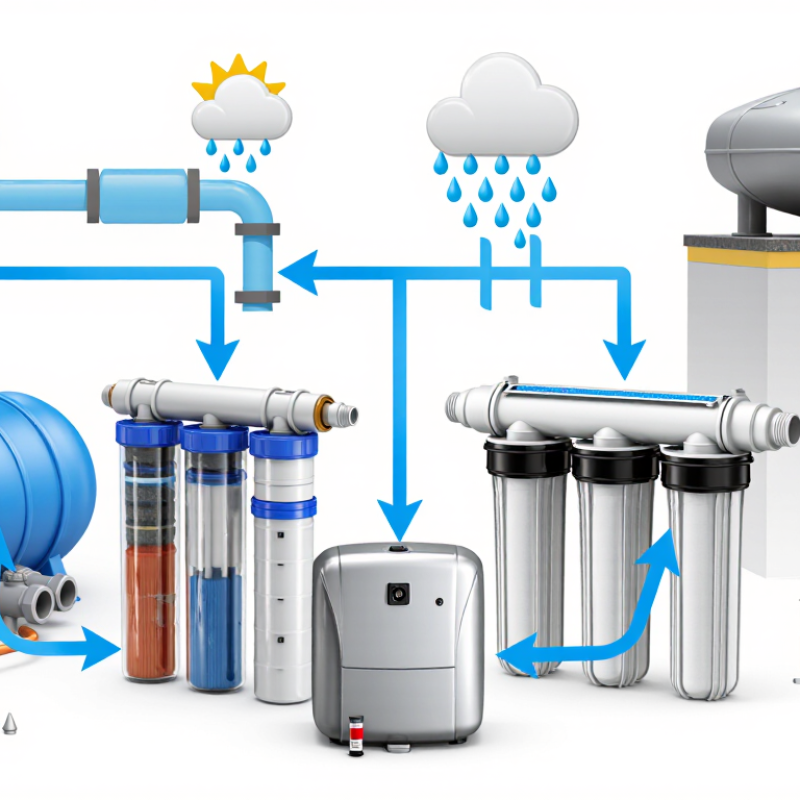
How to Choose the Best Water Tank Filter for Global Buyers?

Define Your Water Tank Filtration Needs and Water Quality Goals

Before choosing a tank filter, define the water problem you need to solve. A roof tank may collect dust, sediment, insects, or microbial contamination. Municipal water may need different treatment after entering an aging storage system. The WHO/UNICEF Joint Monitoring Programme reported that 2.2 billion people lacked safely managed drinking water in 2022. That statistic makes testing more important than guessing.

Test the incoming and stored water separately. Check turbidity, pH, hardness, iron, lead, and microbiological indicators through an accredited laboratory. The WHO Guidelines for Drinking-water Quality recommend managing health risks from source to household tap, not only at the filter. Set measurable goals, such as reducing visible sediment or meeting a specific microbial requirement. A sediment cartridge cannot reliably solve every problem. For dissolved metals, activated carbon, ion exchange, or membrane treatment may be more suitable, depending on test results. Flow rate matters too. A filter that removes contaminants but barely fills a cooking pot is not practical.

Consider tank volume, daily demand, replacement intervals, and cleaning access. Certification against relevant performance standards can improve confidence, but certification does not replace local water testing. I have seen buyers select extremely fine filters because they appear safer. They often clog quickly. That choice needs reflection. Real-world performance depends on maintenance, pressure, temperature, and correct installation. Record test results and replacement dates. Small details reveal whether the filtration goal is actually being achieved.

Compare Filter Types for Different Water Tank Applications

Choosing the best water tank filter starts with the tank’s actual use, not its advertised flow rate. A household rainwater tank may need a washable mesh filter for leaves, insects, and roof grit. A drinking-water tank usually requires finer sediment control, followed by activated carbon to reduce odors and certain organic impurities. Check the water source before choosing.

For irrigation tanks, disc or screen filters are practical because they capture sand and suspended particles without creating excessive pressure loss. Larger agricultural systems may need automatic flushing, while small tanks can use a manual valve. I have found that buyers often underestimate maintenance space. A filter that fits the pipe may still be difficult to remove beside a wall.

Different conditions demand different protection. Coastal areas may require corrosion-resistant housings. Cold regions need materials that tolerate freezing risks. Where microbial control is important, ultraviolet treatment can be added after pre-filtration, but cloudy water reduces its performance. Keep this in mind. Filter ratings also need careful checking, since micron labels are not always directly comparable between products.

Global buyers should confirm flow demand, inlet size, replacement availability, and local drinking-water requirements. Ask for test data and installation guidance, not only a product photograph. A low-cost filter can become expensive when cartridges are difficult to source. I once treated easy installation as a minor detail; it was not. Reliable filtration depends on the whole system, including tank hygiene, pipe condition, and regular inspection.

Evaluate Filtration Performance, Capacity, and Maintenance Requirements

How to Choose the Best Water Tank Filter for Global Buyers?

Filtration performance should match the actual water problem, not only a small micron rating. Ask for test data covering sediment removal, turbidity reduction, and flow performance. Check the test method. A filter rated at five microns may restrict water quickly when sediment levels rise. In field inspections, cloudy water often reveals poor pre-filtration rather than a defective main cartridge. Materials should also suit the stored water and local temperature conditions.

Capacity requires more than matching the filter to tank volume. Estimate daily use, peak flow, and the number of users. A household may need steady pressure during morning showers, while a farm may require short, intense pumping periods. Review pressure loss at the expected flow rate. Oversizing can increase purchase costs, but undersizing creates frequent blockages. I once treated tank capacity as the key figure; that assumption was incomplete.

Maintenance requirements affect reliability across different countries. Choose a design with accessible housings, clear service indicators, and commonly available replacement parts. Inspect the filter after heavy rain, especially where roofs collect dust or leaves. Keep a simple replacement log with dates, water appearance, and pressure readings. Cleaning instructions must be practical for local workers, not only technically correct. Some maintenance intervals look reasonable on paper, yet real water quality can change within days.

Check Material Safety, Certifications, and Global Compatibility

How to Choose the Best Water Tank Filter for Global Buyers?

Material safety should be checked before filtration performance. Choose food-contact materials with documented migration testing. The WHO Guidelines for Drinking-water Quality warn that chemical risks can change with temperature, storage time, and water composition. A filter used on a hot rooftop tank needs different evidence than one used indoors. Look for test results covering the complete filter assembly, including seals, adhesives, and plastic housings. Small components can create large problems.

Certification scope matters. NSF/ANSI/CAN 61 evaluates materials that contact drinking water, while other standards address filtration claims and structural performance. Do not accept a certificate without checking its model number, test conditions, and approved contaminant claims. The 2023 WHO/UNICEF Joint Monitoring Programme report estimated that 2.2 billion people lacked safely managed drinking water in 2022. This makes transparent testing more important, especially in markets with uneven water quality. A certificate is useful, but it is not magic.

Global compatibility includes more than voltage or packaging. Confirm pipe threads, tank openings, flow rates, replacement intervals, and local water pressure. Check performance in hard water, sediment-heavy supplies, and warm climates. Independent laboratory reports are stronger than vague “international quality” statements. I have seen filters fit physically but fail after rapid clogging. That detail is easy to miss. Buyers should also verify local installation rules and whether replacement cartridges are realistically available. Some specifications remain unclear, and that deserves honest review.

Select a Reliable Supplier and Calculate Total Ownership Costs

Choosing a water tank filter for international use requires more than comparing purchase prices. A reliable supplier should provide clear flow-rate data, material specifications, test reports, and replacement schedules. Ask how each batch is inspected. Request installation drawings and maintenance instructions in plain English. A supplier with traceable production records is easier to evaluate than one offering vague performance claims. Local technical support also matters when a tank serves a remote building or agricultural site.

Calculate total ownership cost before approving a quotation. Include the filter price, freight, import charges, installation labor, valves, pressure gauges, and initial testing. Add replacement cartridges, cleaning time, spare parts, water loss during maintenance, and disposal costs. For example, a low-cost unit may need monthly cleaning, while a stronger design may reduce labor visits. Use this practical formula: purchase cost plus operating cost plus maintenance cost plus downtime cost. That figure gives a more realistic comparison.

My first project estimate was too optimistic because it ignored delivery delays and technician travel. I would now request a three-year cost sheet from every shortlisted supplier. Ask for expected service intervals under your actual water conditions, not laboratory water. Hard water, sediment, and seasonal algae can change performance quickly. Get a sample or pilot test when possible. Small details reveal more than polished brochures. Still, no forecast is perfect. Leave a contingency for unexpected replacements and changing freight rates.

How to Choose the Best Water Tank Filter for Global Buyers? - Select a Reliable Supplier and Calculate Total Ownership Costs

Filter Configuration Typical Target Use Nominal Filtration or Treatment Range Typical Rated Flow Recommended Service Interval Indicative Initial System Cost
(USD)
Estimated 5-Year Consumables
(USD)
Estimated 5-Year Service Cost
(USD)
Estimated Freight and Import Allowance
(USD)
Estimated 5-Year TCO
(USD)
Supplier Evidence to Request Reliability Score
(1–5)
Best Fit for Global Buyers
Sediment Cartridge Filter Removal of sand, rust, silt and visible suspended particles from relatively clear tank water. Common cartridge ratings: 5–20 microns.
Does not reliably remove dissolved chemicals, salts or microorganisms.
10–40 L/min Inspect monthly; replace approximately every 3 months, or sooner when pressure drops. $85 $240
20 cartridges × $12
$100
$20 per year × 5 years
$25 $450 Micron test report, food-contact material declaration where applicable, cartridge dimensions, batch traceability, spare-part availability and written replacement guidance. 3.5 / 5 Lowest-cost prefiltration
Suitable where the source water is already microbiologically safe.
Carbon Block Filter Reduction of chlorine taste and odor, selected organic compounds and fine particles, depending on the media and contact time. Common particle ratings: 0.5–5 microns.
Performance depends on carbon type, flow rate and contact time.
5–15 L/min Replace approximately every 6 months, or according to treated volume and water quality. $220 $450
10 cartridges × $45
$125
$25 per year × 5 years
$35 $830 Independent reduction claims, activated-carbon specification, pressure-drop data, replacement cartridge continuity, material safety documentation and warranty terms. 4.0 / 5 Improved taste and odor
A practical choice for treated municipal water stored in tanks.
Ceramic Element Filter Fine particle removal and physical barrier treatment for some bacteria, provided the element is properly rated and maintained. Common nominal ratings: approximately 0.5–1 micron.
It is not a substitute for validated disinfection in high-risk water supplies.
2–8 L/min Clean the outer surface when flow decreases; replace the element approximately once per year. $160 $200
5 elements × $40
$125
$25 per year × 5 years
$30 $515 Pore-size verification, microbial test method, breakage resistance, replacement-element availability, cleaning instructions and storage requirements. 3.5 / 5 Low-energy operation
Useful where electricity is limited and flow demand is moderate.
Multimedia Tank Filter Higher-volume reduction of turbidity, suspended solids and selected iron or manganese forms when the media is correctly designed for the water chemistry. Typical outlet clarity can reach approximately 10–50 microns before polishing.
Backwashing is required; chemical performance is site-specific.
20–80 L/min Backwash approximately weekly or when pressure loss increases; replace or refresh media after about 3–5 years. $650 $180
Media refresh allowance
$250
$50 per year × 5 years
$100 $1,180 Media composition and loading data, backwash flow requirement, pressure-vessel test documentation, valve-cycle testing, installation drawings and regional spare-part support. 4.0 / 5 Large tanks and higher flow
Best when the buyer can provide drainage and regular backwash water.
Sediment Prefilter + UV System Microbiological disinfection support for clear water, combined with sediment protection for the UV chamber. Usually includes a 5-micron prefilter and UV dose commonly designed around 30–40 mJ/cm².
UV does not remove sediment, salts, metals or chemical contaminants.
10–40 L/min Replace the sediment cartridge every 3 months and the UV lamp approximately every 12 months; clean the quartz sleeve as required. $420 $690
5 lamps × $90 + 20 cartridges × $12
$150
$30 per year × 5 years
$50 $1,310 Verified UV dose at rated flow, electrical safety certification, lamp-hour indicator, quartz-sleeve quality, replacement-lamp continuity and alarm or fail-safe documentation. 4.5 / 5 Higher hygiene requirement
Suitable when reliable electricity and clear, prefiltered water are available.
Calculation basis: Illustrative five-year benchmark for one tank serving approximately 1,000 litres per day. Total ownership cost equals initial system cost + five-year consumables + five-year routine service allowance + freight/import allowance. Figures are typical market-planning ranges in USD and exclude installation labor, taxes, water testing, electricity, water wastage, financing and major civil works. Actual replacement intervals depend on source-water quality, treated volume, climate, operating pressure and local regulations.
Supplier selection rule: Prefer suppliers that provide verifiable test methods, complete technical drawings, consistent replacement parts, documented quality-control procedures, clear warranty exclusions, export packaging details, realistic lead times and after-sales support in the destination region. Never select a filter solely by purchase price; confirm the water analysis, required flow, available pressure, power supply and local compliance requirements first.

We Meet Our Clients Needs.

Meeting the diverse needs of our clients, we have complete machining facilities for everything from single part prototypes to large quantity production. Our small size is one of our biggest assets. It allows us to control costs and maintain the highest of standards.

Quality orientated  and delivery always on time or earlier than originally promised.

Strongly recommend MSD.