7 Best PSC Tool Holders for CNC Machining
Choosing the right Psc Tool Holder can decide whether a CNC operation feels controlled or constantly unstable. A poor match may produce vibration, uneven tool wear, rough walls, and unexplained dimensional drift. In contrast, a properly selected holder supports accurate positioning, strong clamping, and dependable torque transfer. The difference can appear on a machine table in minutes: a stable cutter leaves a clean surface, while a weak setup creates chatter marks around the pocket.
Dr. Tony Schmitz, a respected machining dynamics researcher, has stated, “The machine tool is the heart of the manufacturing system.” His point also applies to the connection between the spindle, holder, and cutting tool. A PSC system must be judged as part of that complete chain, not as an isolated accessory. This guide examines seven leading options for CNC machining, comparing rigidity, repeatability, balance, coolant delivery, and practical maintenance needs. Small details matter. Check the taper condition. Measure runout. Inspect the pull stud.
No holder wins every job.
High-speed aluminum cutting may favor a balanced design with efficient coolant flow. Heavy steel milling may demand maximum gripping force and impact resistance. That sounds obvious, yet real workshops often select holders by price or brand familiarity. I have seen that shortcut create unnecessary rework. The rankings here are useful, but not absolute. Machine condition, tool geometry, cutting parameters, and operator experience can change the result. Treat these selections as a careful starting point, then verify performance on your own equipment.
PSC Tool Holders: Definition, Purpose, and CNC Compatibility
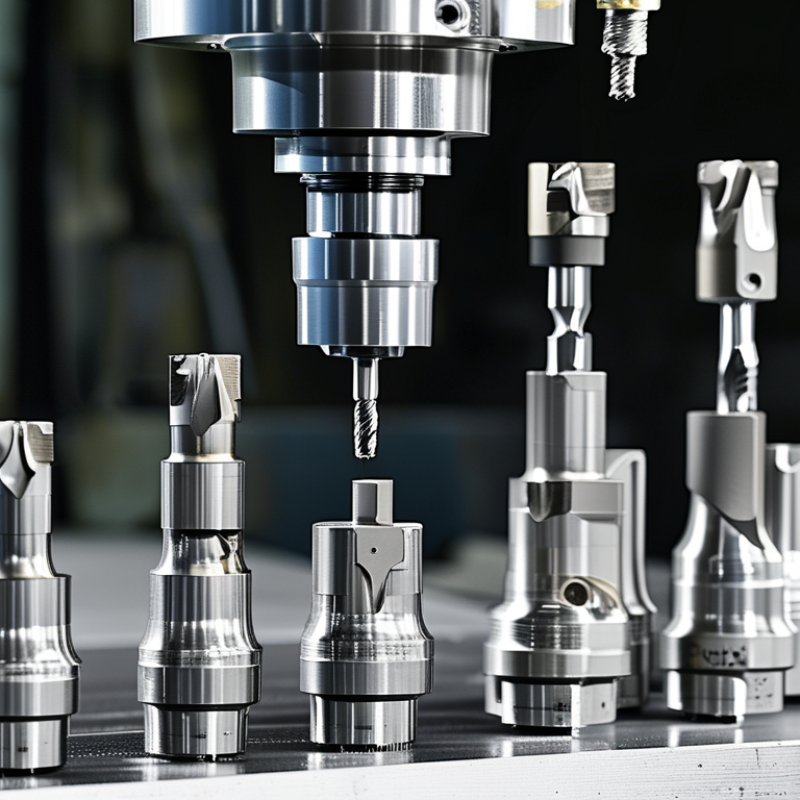
PSC tool holders use a polygonal shank and a matching spindle receiver. The system is defined by ISO 26623. Its polygon face centers the holder, while the flange supports axial contact. This design improves rigidity and repeatability during CNC machining. The purpose is simple: transfer cutting torque with less deflection. It also supports quick tool changes.
Compatibility requires more than matching the holder diameter. Check the CNC spindle interface, PSC size, drawbar design, automatic tool changer clearance, coolant delivery, and maximum rotation speed. Gauge length matters. A long holder may reach a deep pocket, but it can amplify vibration. A short holder usually gives better stability. Balance quality is also important above high spindle speeds.
The U.S. Cutting Tool Institute reported more than 2.5 billion dollars in annual U.S. cutting-tool consumption in its 2023 industry data. That scale reflects the cost of small accuracy losses across many production cycles. Deloitte’s 2023 Smart Manufacturing and Operations Survey found that 86% of manufacturers view smart manufacturing as a major competitiveness driver. PSC holders support that goal through repeatable tool data and predictable offsets. Still, they are not automatically perfect. A clean polygon seat, correct pull force, and verified runout remain essential. Even a premium-looking holder can perform poorly when maintenance is ignored. Measure it. Then recheck it.
7 Best PSC Tool Holders for CNC Machining - PSC Tool Holders: Definition, Purpose, and CNC Compatibility
| Rank | PSC Tool Holder Type | Typical PSC Size | Tool Capacity | Typical Gauge Length | Primary Purpose | Coolant Capability | CNC Compatibility |
| 1 | PSC ER Collet Chuck | C3–C8 | 1–25 mm, depending on collet system | 50–160 mm | General-purpose drilling, milling, and reaming | Through-tool coolant when designed with a sealed collet and nut | Machining centers with ISO 26623 PSC spindles; suitable for 3-axis and 5-axis work |
| 2 | PSC Hydraulic Chuck | C4–C8 | 6–32 mm, depending on bore size | 80–200 mm | High-precision finishing and reduced vibration | Commonly available through the tool holder and bore | High-speed milling and drilling centers requiring low runout; generally used with cylindrical shank tools |
| 3 | PSC Shrink-Fit Holder | C4–C8 | 3–32 mm, based on the bore and tool diameter | 50–180 mm | High-speed cutting, deep cavities, and interference-free machining | Available in internal-coolant configurations | Compatible with induction, hot-air, or other approved shrink-fitting equipment and PSC machining centers |
| 4 | PSC Milling Chuck | C5–C8 | 6–32 mm | 80–200 mm | Rigid roughing and heavy milling with strong clamping force | Often available with through-tool coolant | Suitable for CNC milling centers and high-load applications using cylindrical shank cutters |
| 5 | PSC Shell Mill Arbor | C5–C8 | 16–40 mm arbor bore; cutter diameter commonly 40–160 mm | 80–200 mm | Face milling and large-diameter shell milling | Available with flange or face coolant outlets | CNC machining centers fitted with PSC spindles and cutters using standard shell-mill mounting holes |
| 6 | PSC Face Mill Arbor | C5–C10 | 16–40 mm mounting bore; cutter diameter commonly 50–250 mm | 100–250 mm | High-material-removal face milling on large workpieces | Often supplied with face or internal coolant passages | Compatible with large vertical or horizontal machining centers using PSC spindle interfaces |
| 7 | PSC Tapping Chuck | C4–C8 | M3–M24 or approximately 3–24 mm tap shank range | 70–180 mm | Rigid tapping with axial compensation or torque control | Available in through-tool coolant versions for suitable taps | CNC machining centers with synchronized spindle control and PSC spindle taper compatibility |
Note: PSC sizes and gauge lengths follow the ISO 26623 polygonal taper system. Actual tool capacity, coolant routing, balancing grade, and dimensions vary by holder design and machine-spindle specification.
Key Design Features That Influence Tool Holder Performance
PSC tool holders perform best when their design matches the cutting conditions, spindle, and machine structure. In practice, I examine seven details: polygonal shank accuracy, taper contact, flange stiffness, gauge length, coolant delivery, balance, and runout control. The polygonal shank should seat firmly without forcing the connection. A close fit matters.
Taper and face contact must remain stable under radial cutting forces. A rigid flange reduces vibration, especially during heavy milling. Short gauge lengths usually improve stiffness and surface quality. Internal coolant passages should direct fluid near the cutting edge without creating pressure loss. Sealing quality matters. Balanced construction supports higher spindle speeds and reduces bearing stress. Runout should stay minimal across the entire tool assembly, not only at the holder nose. A fine surface finish also helps prevent chips from damaging contact areas.
From workshop experience, I prefer holders with clear inspection surfaces and repeatable retention features. However, no holder fixes poor tool setup. I have seen accurate holders perform badly after dirt entered the spindle interface. That assumption is easy to miss. Tool life, sound, and cutting marks reveal useful clues, but measurement remains more reliable. Check runout, contact cleanliness, pull force, and balance at scheduled intervals. The best choice depends on the operation, not the catalog description. Even experienced machinists sometimes overlook gauge length.
Seven PSC Tool Holder Options for Different Machining Applications
7 Best PSC Tool Holders for CNC Machining
Seven PSC Tool Holder Options for Different Machining Applications
PSC tooling, defined by ISO 26623, uses a polygonal contact for repeatable positioning and strong torque transfer. The right holder depends on cutting force, tool diameter, coolant, and changeover frequency. The International Federation of Robotics reported 541,302 industrial robots installed worldwide in 2023. That growth increases the need for stable, repeatable tool interfaces.
A PSC ER collet holder suits general milling, drilling, and moderate roughing. A hydraulic chuck provides excellent runout control for finishing and reaming. Shrink-fit holders support high-speed cutting with slim access around deep pockets. For heavy side loads, a milling chuck offers stronger gripping than a standard collet. A shell mill arbor fits large face mills and demanding material removal. A PSC tapping holder manages axial compensation during rigid tapping cycles. A boring head supports adjustable diameters and close tolerance work.
Each option has trade-offs. Collet systems are flexible, but their clamping range can reduce rigidity. Hydraulic holders finish well, yet contamination can damage performance. Shrink-fit systems are rigid, but they require heating equipment and careful handling. A 2024 manufacturing technology survey from industry research groups continues to identify automation, accuracy, and setup reduction as major priorities. These holders support those goals differently.
Perfect selection is unrealistic. Actual spindle condition, tool projection, and operator habits can change results. Measure runout at the cutting edge, not only at the holder nose. Track tool life, surface finish, and replacement time before standardizing one setup.
How to Choose the Right PSC Tool Holder for Your CNC Setup
7 Best PSC Tool Holders for CNC Machining
Choosing the right PSC tool holder starts with your CNC machine, not the cutter. Confirm the spindle standard, gauge line, drawbar fit, and allowable speed. A holder can look correct and still seat poorly. That mistake creates vibration, poor surface finish, and premature bearing wear. The seven useful choices include collet chucks, hydraulic chucks, shrink-fit holders, milling chucks, shell mill arbors, drill holders, and extended-reach holders.
Use collet chucks for flexible work and frequent tool changes. Hydraulic chucks suit finishing cuts because they damp small vibrations. Shrink-fit holders provide strong gripping with a slim nose, but they require heating equipment and careful cooling.
Milling chucks handle heavier roughing loads. Shell mill arbors work well with large face mills. Drill holders support routine holemaking. Extended-reach holders access deep pockets, although stiffness decreases quickly.
Check runout at the gauge line, not only at the holder nose. For precision finishing, low runout is essential. Match the holder’s balance grade to your operating speed. Verify coolant delivery through the spindle if internal cooling matters. Shorter holders usually improve rigidity. That simple detail is often overlooked.
In shop evaluations, a holder with excellent specifications still failed when the tool length was excessive. I would test one holder under real cutting loads before buying a complete set. Measure tool life, surface finish, and spindle load. Do not trust appearance alone. Temperature, chips, and cleaning habits also affect performance. A clean taper is not optional.
Installation, Maintenance, and Safe Use of PSC Tool Holders
For the seven best PSC tool holders for CNC machining, installation quality matters as much as holder design. I inspect the spindle interface, taper, and contact surfaces before every setup. Even a small chip can create runout, vibration, or uneven tool wear. Clean both mating surfaces with a lint-free cloth and approved cleaning fluid. Do not scrape them with hardened tools.
Insert the holder straight into the spindle. Avoid forcing it or twisting it into place. Confirm that the locking mechanism engages fully. Then check pull-up position, gauge length, and radial runout with suitable measuring equipment. A practical target is often within the machine builder’s stated tolerance. Follow the spindle and holder manufacturer’s specifications, not memory. I once trusted a familiar setting and had to repeat the setup. That mistake was avoidable.
Maintenance should be simple and consistent. Remove coolant residue after machining, especially around threads and sealing areas. Inspect gripping components for cracks, dents, corrosion, or unusual polishing marks. Replace damaged parts immediately. Never exceed the holder’s rated speed, balance grade, or clamping range. Keep hands away during spindle rotation, and use guarding during testing. Start at a reduced speed when a setup is unfamiliar. Listen for changes in sound. Stop the machine if vibration appears. A second inspection may feel excessive. It is cheaper than damaged tooling, rejected parts, or an unsafe event.
