
7 Best Cordierite Saggar Suppliers for Global Buyers?
Choosing the right Cordierite Saggar supplier can affect kiln efficiency, product consistency, and replacement costs. Global buyers often compare price first, yet performance usually depends on more than a quotation. Thermal shock resistance, dimensional stability, porosity, wall thickness, and firing temperature must match the application. A saggar that looks durable in a catalog may crack after repeated loading and cooling.
This guide reviews seven Cordierite Saggar suppliers serving international buyers. The comparison considers manufacturing experience, material quality, customization options, export capability, packaging, and after-sales communication. Practical details matter. Ask whether the supplier controls raw material blending, records firing conditions, and checks flatness before shipment. For example, a 300-millimeter saggar may need different reinforcement from a smaller laboratory model. Small differences can become expensive.
No supplier is perfect. That matters. Some companies offer strong technical support but higher minimum order quantities. Others provide competitive prices but limited documentation or slower responses. This article does not present a permanent ranking. Market conditions, production capacity, and regional logistics can change. Buyers should request recent test data, sample units, tolerances, and written warranty terms before placing a large order. Independent testing may also be sensible for demanding ceramic, electronic, or advanced-material applications. A careful decision balances laboratory evidence with real operating experience, not promotional claims alone.
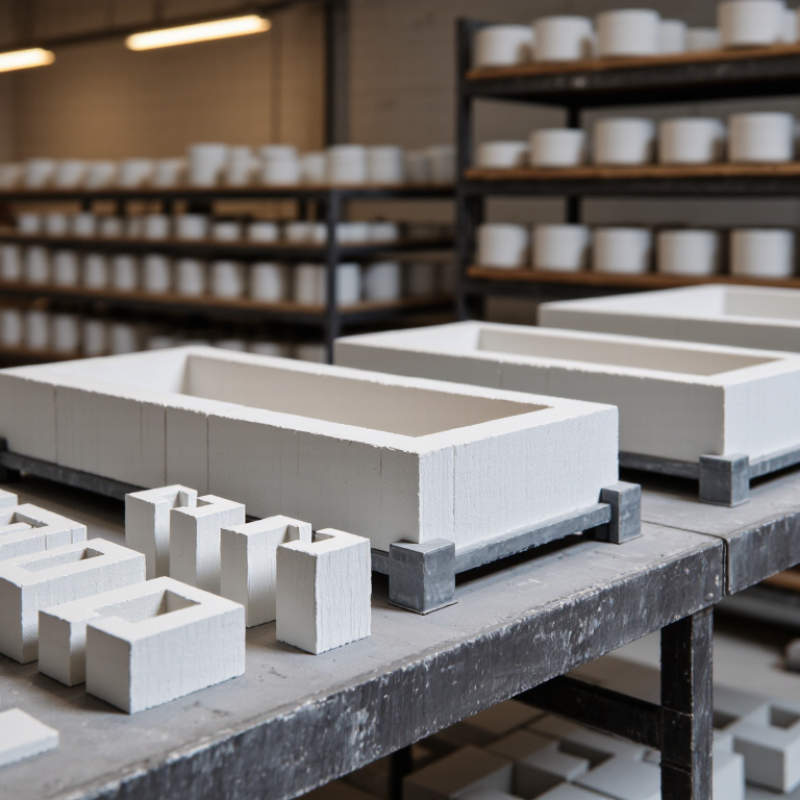
What Are Cordierite Saggars and Why Do Global Buyers Use Them?
What Are Cordierite Saggars and Why Do Global Buyers Use Them?
Cordierite saggars are reusable ceramic boxes used during high-temperature firing. They hold powders, pellets, or shaped parts inside a kiln. Their walls reduce direct flame contact, dust exposure, and accidental mixing. This matters when producing battery materials, electronic ceramics, porcelain, and other precision products.
Thermal stability is their main advantage. A review in the Journal of the European Ceramic Society reports cordierite’s thermal expansion at roughly 2–3 × 10⁻⁶ K⁻¹, depending on composition and porosity. Low expansion helps reduce cracking during rapid heating and cooling. The European Commission’s Ceramic Manufacturing BREF reports firing temperatures commonly ranging from about 850°C to 1,450°C across ceramic products. Saggar design must match that duty.
But cordierite is not automatically the best choice. Repeated cycles can cause edge chipping, warping, or surface contamination. Buyers should check wall thickness, loading weight, kiln atmosphere, and actual cooling speed. A saggar that survives one trial may fail after fifty cycles. That assumption deserves testing. Practical audits should record weight loss, cracks, powder pickup, and dimensional change after each firing group. Global buyers also compare nesting efficiency, export packaging, replacement frequency, and usable internal volume, not only the purchase price.
| Supplier Profile | Typical Product Range | Common Buyer Applications | Key Technical Requirements | Typical Operating Considerations | Best Fit for Global Buyers | Verification Documents to Request |
|---|---|---|---|---|---|---|
| 1. High-Volume Industrial Producer | Standard cordierite saggars in rectangular, square, and round formats | High-volume firing of ceramic powders, electronic components, catalysts, and technical ceramics | Consistent dimensions, stable wall thickness, low warpage, repeatable batch quality | Cordierite is selected for its low thermal expansion and good thermal-shock resistance; actual service life depends on firing cycle, load, handling, and atmosphere | Buyers requiring repeat orders, standardized tooling, and predictable production capacity | Dimensional inspection reports, batch records, thermal-cycle test data, and sample approval records |
| 2. Custom-Engineering Specialist | Made-to-order saggars with custom footprints, lids, grooves, slots, handles, or stacking features | Unusual furnace layouts, specialty powders, research production, and customized firing fixtures | Accurate drawings, controlled tolerances, suitable corner radii, and designs that reduce stress concentration | Custom geometry can improve furnace utilization, but sharp corners and uneven wall thickness may increase thermal stress | Buyers whose standard saggar sizes create excessive unused furnace space or handling problems | CAD drawings, tolerance tables, prototype approval procedures, and engineering-change control documents |
| 3. Electronic-Materials Saggar Supplier | Clean, smooth, low-contamination saggars for electronic and advanced ceramic powders | Ferrite, dielectric, piezoelectric, battery-related ceramic materials, and other sensitive powder processes | Low particle shedding, controlled surface condition, suitable chemical compatibility, and stable firing behavior | Product chemistry and surface cleanliness should be matched to the powder system; cordierite is not automatically suitable for every formulation | Buyers prioritizing contamination control and product yield over the lowest purchase price | Chemical composition, surface-finish specification, contamination-control procedure, and compatibility test results |
| 4. High-Temperature Ceramic Fixture Supplier | Heavy-duty saggars, setter plates, kiln furniture, and compatible covers | Repeated kiln firing, technical ceramics, powder calcination, and demanding thermal-processing environments | Appropriate refractoriness, mechanical strength at temperature, resistance to thermal cycling, and adequate load capacity | Cordierite products are commonly valued for low thermal expansion; maximum use temperature must be confirmed for the specific formulation and firing atmosphere | Buyers needing coordinated kiln-furniture systems rather than a single saggar size | Maximum recommended service temperature, hot-load information, thermal-shock test method, and usage guidelines |
| 5. Small-Batch and Laboratory Supplier | Small saggars, sample trays, crucible-style containers, and short-run custom pieces | Universities, laboratories, pilot lines, formulation development, and low-volume specialty production | Short lead times, flexible quantities, traceable materials, and accurate small-part dimensions | Small-format products are useful for development work, but laboratory performance should not be assumed to represent full-scale production performance | Buyers validating a powder, firing profile, or new product before committing to production quantities | Material certificate, sample photographs, dimensional report, small-order terms, and repeatability data |
| 6. Export-Focused Packaging Supplier | Export-ready standard saggars with protective packaging, palletization, and shipment documentation | International distributors, furnace operators, contract manufacturers, and multi-country procurement programs | Packaging that protects brittle ceramic goods from impact, moisture control where needed, clear labeling, and pallet stability | Cordierite saggars are ceramic products and can crack from impact even when thermal properties are suitable; packaging quality is part of total cost | Buyers importing by sea or air who need reliable delivery and reduced breakage claims | Packing specification, drop-test or packaging validation record, export dimensions, HS classification support, and claims procedure |
| 7. Integrated Technical-Ceramics Partner | Saggars combined with setters, kiln shelves, trays, tubes, crucibles, and technical consultation | Production lines seeking coordinated refractory components and process support | Compatibility across components, stable raw-material control, process guidance, and documented quality management | Saggar life is affected by thermal profile, stacking pressure, powder interaction, cleaning practice, and handling; system-level advice can reduce premature failure | Buyers wanting one technical contact for kiln furniture, replacement planning, and process optimization | Quality-management certification, raw-material controls, application references, replacement recommendations, and corrective-action records |
We Meet Our Clients Needs.
Meeting the diverse needs of our clients, we have complete machining facilities for everything from single part prototypes to large quantity production. Our small size is one of our biggest assets. It allows us to control costs and maintain the highest of standards.
Quality orientated and delivery always on time or earlier than originally promised.
Strongly recommend MSD.