10 Best CNC Machining Equipment for Global Buyers?

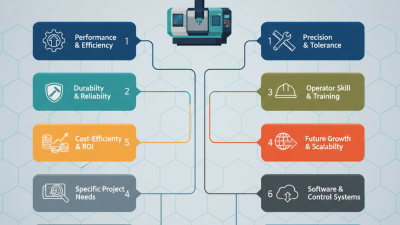
Choosing the right CNC machining equipment can shape production quality, delivery speed, and long-term operating costs. Global buyers often compare machines by price, spindle power, accuracy, and automation. Those numbers matter, but they rarely tell the whole story.

A reliable machine must match the material, part size, tolerance, and expected workload. Aluminum housings may need high-speed spindles, while hardened steel parts demand stronger cutting systems. A five-axis machine can reduce setups, but it may increase training and maintenance needs. Think carefully.

This guide reviews ten leading types of CNC machining equipment for international buyers. It considers machining centers, CNC lathes, Swiss-type machines, EDM systems, routers, and multitasking platforms. Each option is examined through practical factors, including work envelope, repeatability, control systems, tooling compatibility, energy use, and operator access.

Real purchasing decisions also involve shipping, installation, spare parts, software support, and local technical service. A low initial price can become expensive when replacement components take months to arrive. Buyers should request test cuts, inspect sample parts, and verify published specifications with actual production evidence. Manufacturer reputation helps, but independent feedback and service records provide stronger confidence.

No machine suits every factory. That is the difficult part. A compact three-axis center may outperform a sophisticated system in a small workshop. Meanwhile, a high-volume plant may need robotic loading and real-time monitoring. The following selection aims to support careful comparisons, not promote one universal solution. Experiences can differ, and buyers should confirm every recommendation against their own materials, workforce, compliance requirements, and production targets.
10 Best CNC Machining Equipment for Global Buyers?

What CNC Machining Equipment Is and Why Global Buyers Need It

CNC machining equipment uses computer-controlled instructions to cut, drill, mill, or turn materials with repeatable accuracy. A typical setup includes a machine tool, controller, cutting tools, workholding, coolant, and inspection equipment. It converts a digital design into measured physical parts. That connection matters when buyers compare the 10 best CNC machining equipment options for global production.

The market is expanding quickly. Grand View Research valued the global CNC machine market at about USD 83.3 billion in 2023. Its report forecasts an 8.5% compound annual growth rate from 2024 to 2030. Global buyers need more than impressive specifications. They need stable tolerances, accessible spare parts, clear electrical standards, and dependable operator training. A machine that cuts aluminum well may struggle with hardened steel. That detail is easy to miss.

Deloitte’s 2024 Smart Manufacturing and Operations Survey found that 86% of manufacturing leaders expect smart manufacturing to become a major competitiveness driver within five years. CNC equipment now supports connected production, tool-life monitoring, and faster quality checks. Buyers should test sample parts before signing contracts. Ask for cycle-time evidence, repeatability results, and service response terms. A larger machine is not automatically better. Sometimes, a compact three-axis system fits the workload more effectively. Cost comparisons can also be imperfect, because installation, software, maintenance, and training may exceed the quoted machine price.

How to Compare CNC Machines by Type, Capacity, and Precision

Global buyers comparing the 10 best CNC machining equipment should begin with machine type. Three-axis mills suit common prismatic parts and simpler programming. Five-axis machines reduce repositioning and improve access to complex surfaces. CNC lathes fit round components, while mill-turn systems combine both operations. Each type affects tooling, operator skill, maintenance, and purchase cost.

Capacity must match real production, not hopeful estimates. Check the working envelope, table load, chuck size, spindle torque, and tool capacity. A machine may accept a large workpiece but lack enough clearance for fixtures. Precision requires deeper checking. Compare positioning accuracy, repeatability, thermal stability, and calibration procedures. Ask for inspection records from actual production conditions. Temperature changes can shift results. A factory-floor specification may differ from a showroom claim. My early comparison sheets focused too heavily on micron figures. That was incomplete. Material, tool wear, vibration, and operator practice also influence the finished part.

Tips: Request sample cuts using your material and tolerances. Measure the part independently. Check service response times, training, spare-part availability, and software compatibility. Leave capacity for future jobs, but avoid buying unused space. A smaller, stable machine can outperform a larger one on delicate components. Test it.

The 10 Best CNC Machining Equipment Categories for Global Buyers

The 10 Best CNC Machining Equipment Categories for Global Buyers

The practical shortlist covers ten categories. They include three-axis mills, five-axis machining centers, CNC lathes, mill-turn centers, Swiss-type lathes, CNC routers, wire EDM machines, sinker EDM machines, cylindrical grinders, and laser cutters.

Each category fits a different production problem. Five-axis systems reduce repositioning for aerospace-style contours. Swiss-type lathes suit small medical or electronic components. Wire EDM handles hardened materials with narrow cutting paths. Routers remain useful for large panels and softer materials.

Fortune Business Insights valued the global CNC machine market at USD 83.99 billion in 2023. It projects USD 128.86 billion by 2030, with a 6.3% compound annual growth rate.

The report links demand to automation, precision manufacturing, and flexible production. The International Federation of Robotics recorded 541,302 industrial robot installations worldwide in 2023.

That figure matters because buyers increasingly evaluate CNC equipment as part of an integrated cell, not as an isolated machine.

Practical evaluation should begin with material, tolerance, batch size, and available floor space. Check spindle speed, axis travel, positioning accuracy, thermal stability, and chip evacuation.

Ask for documented acceptance tests, service response times, spare-parts coverage, and electrical compatibility. A low purchase price can hide expensive commissioning delays.

I still find the ten-category model imperfect. A five-axis mill may replace several machines, but it can demand stronger programming skills and stricter maintenance. Local training capacity often decides the real return on investment.

Small details matter.

Key Specifications, Automation Features, and Software Compatibility

10 Best CNC Machining Equipment for Global Buyers?

Global buyers should compare equipment through measurable specifications, not attractive brochures. A practical shortlist includes three-axis mills, five-axis machining centers, turning centers, Swiss-type lathes, vertical lathes, wire cutting machines, sinker machines, routers, grinding machines, and automated cells. Check spindle speed, motor power, axis travel, table load, repeatability, and working envelope. For example, a small shop may need a 600 mm travel, while aerospace-style parts require more reach and tighter thermal control. A low purchase price can hide expensive tooling or difficult maintenance.

Automation features strongly affect output. Look for automatic tool changers, pallet systems, workpiece probing, chip conveyors, and robotic loading. In my experience, probing reduces setup errors, but it cannot replace skilled inspection. Sensors can monitor vibration, temperature, and tool wear. Useful alerts should be clear, not excessive. Safety doors, interlocks, and emergency controls must be easy to test. Keep spare parts accessible. That detail matters.

Software compatibility can determine whether equipment becomes productive or frustrating. Confirm support for common CAD and CAM file formats, reliable post processors, simulation, and direct numerical control communication. Check whether the controller accepts standard G-code and supports remote diagnostics. An open data interface can simplify production tracking, but it may increase cybersecurity responsibilities. Test one real component before ordering. Specifications sometimes look perfect on paper. They do not always reflect operator skill, local service quality, or the learning time required.

How to Choose Suppliers, Check Quality, and Control Total Costs

10 Best CNC Machining Equipment for Global Buyers?

How to Choose Suppliers, Check Quality, and Control Total Costs

Choosing CNC equipment starts with supplier evidence, not catalog photographs. Request machine specifications, factory acceptance records, calibration certificates, and recent customer references. Ask who makes critical components and where final assembly occurs. The ISO Survey 2023 recorded more than 1.2 million ISO 9001 certificates worldwide. Certification helps, but it does not prove every shipment is consistent. Audit the actual process.

During an audit, inspect incoming inspection, tool management, thermal compensation, and traceability. Ask for a sample part made from your drawing, then measure it independently. Review Cpk data for critical dimensions, not only average tolerance results. Require documented first-article inspection and corrective-action deadlines. Keep video evidence and serial numbers. Small details matter. A supplier may show a new machine while older equipment produces your parts. That uncomfortable possibility deserves a direct question.

Total cost includes tooling, programming, inspection, packaging, freight, duties, maintenance, energy, and rejected parts. Compare landed cost per accepted component, not the hourly machining rate. U.S. Department of Energy guidance estimates leaks can waste 20–30% of compressor output. Deloitte’s 2024 Smart Manufacturing and Operations Survey found 86% of manufacturers view smart manufacturing as a competitiveness priority. Sensors can expose downtime, but sensors cannot repair poor planning. Start with a pilot batch and agreed acceptance limits. Recheck the model after three months; early estimates are often too optimistic.

We Meet Our Clients Needs.

Meeting the diverse needs of our clients, we have complete machining facilities for everything from single part prototypes to large quantity production. Our small size is one of our biggest assets. It allows us to control costs and maintain the highest of standards.

Quality orientated  and delivery always on time or earlier than originally promised.

Strongly recommend MSD.