2026 Top CNC Machine Design Types for Global Buyers

Choosing the right CNC machine design can shape production speed, accuracy, maintenance costs, and long-term business growth. Global buyers now compare more than spindle power or table size. They examine machine structure, control systems, automation options, energy use, and supplier support. A compact three-axis machine may suit a small workshop, while a five-axis model can reduce setups for complex aerospace or medical components. The best choice depends on actual workpieces, not impressive specifications alone.

This guide reviews the leading CNC machine design types for global buyers in 2026. It considers vertical and horizontal machining centers, turning machines, five-axis platforms, Swiss-type lathes, and hybrid systems. Each design offers practical strengths. Each also creates compromises. A horizontal machine may improve chip removal, but it often needs more floor space. A hybrid machine can combine operations, yet its controls and maintenance may require deeper technical training. Small details matter. A rigid cast frame, stable coolant flow, and accessible service panels can influence daily output more than a brochure suggests.

Real purchasing decisions require evidence. Buyers should request sample parts, inspect accuracy reports, confirm compliance documents, and evaluate after-sales response times. Supplier experience matters, especially when installation, operator training, and spare parts cross borders. No design is perfect. Even experienced teams can misjudge future demand or underestimate tooling costs. Careful buyers should question optimistic promises and test their assumptions before signing an order. The following overview provides a practical framework for comparing machine designs, applications, risks, and total ownership value.
2026 Top CNC Machine Design Types for Global Buyers

CNC Machine Design Basics and Core Structural Components

2026 Top CNC Machine Design Types for Global Buyers

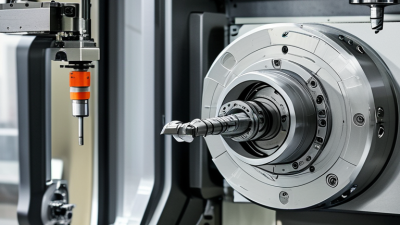
CNC machine design begins with a rigid structural frame. The frame supports cutting forces, moving assemblies, and workpiece weight. Cast iron, welded steel, and mineral composite frames offer different performance levels. Cast iron reduces vibration well, while welded steel can simplify fabrication and maintenance. Mineral composites may improve damping, but they require careful production control.

The core structure includes the bed, column, table, spindle housing, guideways, and drive system. The bed must remain stable during acceleration and heavy cutting. Linear guideways control movement along the machine axes. Ball screws transfer motor rotation into precise linear motion. Rack-and-pinion systems may suit larger travel ranges. The spindle housing needs strong support, because small alignment errors can create visible tool marks.

From practical machine evaluations, thermal behavior deserves equal attention. Heat from the spindle, motors, and workshop can change component dimensions. Designers often use cooling channels, temperature sensors, and controlled warm-up cycles. Small details matter. A poorly sealed guideway can collect chips quickly. A flexible column can reduce accuracy during deep cuts. No design is perfect. A heavier frame may improve stability but increase shipping costs and installation demands. An early design should include maintenance access, electrical safety, and realistic operator reach. These choices help global buyers compare machines beyond speed ratings and attractive specifications.

Major CNC Machine Types Classified by Motion and Function

2026 Top CNC Machine Design Types for Global Buyers

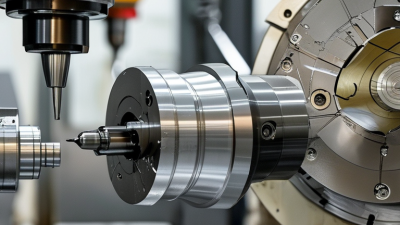
CNC machines are best classified by motion and function, not by appearance alone. Three-axis machining centers move along X, Y, and Z axes. They suit plates, brackets, housings, and many general workshop jobs. Four- and five-axis systems add rotary movement. They can reach angled surfaces, reduce refixturing, and improve accuracy on turbine parts or medical components. Turning centers rotate the workpiece while cutting tools travel across it. Swiss-type and mill-turn designs combine both methods, although their programming and maintenance demands are higher.

Function creates another useful classification. CNC mills remove material with rotating cutters. Lathes produce shafts, threads, and cylindrical profiles. CNC routers handle sheets and softer materials, while wire-cut electrical discharge machines shape hardened conductive parts through controlled sparks. The 2024 Grand View Research analysis estimated the global CNC machine market at over 86 billion US dollars, with continued growth through 2030. Its findings suggest rising demand for automation, but market size alone cannot select a suitable machine.

In practice, buyers should compare travel, spindle power, rigidity, positioning accuracy, control features, and service access. ISO 230 testing standards help verify machine-tool accuracy under defined conditions. Still, advertised accuracy may not reflect heat, vibration, or operator habits on the factory floor. I would not choose five-axis capability without confirmed part geometry and utilization data. More axes can mean fewer setups. They can also mean more training, downtime, and hidden cost. The categories overlap, and that is where many procurement decisions become imperfect.

Key Design Features for Different Industrial Applications

For global buyers, CNC machine design should match the application, not chase maximum specifications. Aerospace work needs a rigid gantry, thermal stability, and five-axis access for complex contours. Automotive production favors high-speed spindles, automatic tool changing, and reliable chip evacuation. Medical components demand clean enclosures, fine positioning, and controlled process records. A compact machining center suits small workshops, while a heavy-duty horizontal design handles large steel parts more confidently. It sounds obvious, yet purchasing teams often compare spindle speed before checking fixture space.

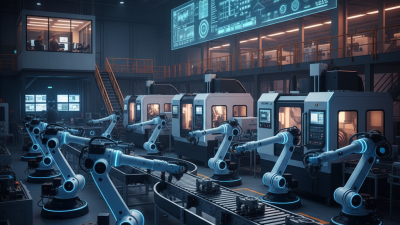
Automation is becoming a practical design requirement. The International Federation of Robotics reported 541,302 industrial robots were installed worldwide in 2023, showing stronger demand for connected production. A CNC system should therefore support robotic loading, barcode tracking, and remote condition monitoring. NIST guidance on smart manufacturing also emphasizes interoperable data and secure measurement processes. Buyers should examine controller compatibility, sensor access, calibration routines, and operator training. Energy use matters too. The U.S. Department of Energy identifies motors, drives, and compressed-air systems as major industrial efficiency opportunities. However, integrated features can increase maintenance complexity. A fully automated cell may look impressive, but it can underperform when local technicians cannot repair it quickly. Design reviews should include real floor conditions, not only catalog figures.

How to Evaluate CNC Machine Designs for Global Purchasing

Choosing a CNC machine design for global purchasing requires more than comparing prices. A three-axis mill may suit flat parts, while a five-axis model reduces repeated setups for complex surfaces. Turning centers support cylindrical work, but their value depends on chuck size, spindle power, and bar capacity. Match the design to actual materials, tolerances, batch sizes, and operator skills.

Review the machine structure closely. A rigid cast frame can reduce vibration during heavy cutting. Linear guides, ball screws, and protected cable routes affect long-term accuracy. Ask for sample test results, positioning data, thermal compensation details, and maintenance intervals. Check the electrical system, coolant arrangement, floor space, lifting points, and shipping weight. Small oversights can create expensive installation delays.

Global buyers should verify documentation, safety compliance, language options, remote support, spare-part access, and local service capability. A machine may meet production targets yet fail because technicians cannot diagnose alarms quickly. Request a video acceptance test using similar material and tooling. Confirm software compatibility with existing CAD/CAM systems. A low purchase price can hide training, tooling, customs, or downtime costs. No checklist is perfect; buyers sometimes overvalue impressive specifications and undervalue daily usability. Reflect on that before signing.

2026 Trends Shaping CNC Machine Design and International Selection

By 2026, CNC machine design will focus on adaptability, energy efficiency, and measurable production data. Global buyers will increasingly compare machine architectures, not just cutting speed. Modular spindle systems can support different materials and future upgrades. Compact enclosures may also reduce factory floor requirements. This matters when facilities face expensive expansion costs.

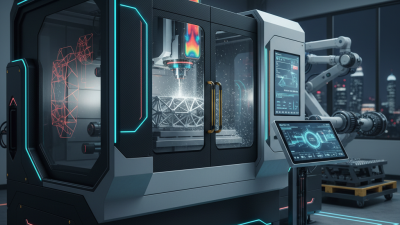
Digital twins will become more practical during machine selection. Buyers can test cycle times, tool paths, and maintenance access before installation. Remote diagnostics may shorten downtime, especially when technical teams work across borders. However, connectivity creates cybersecurity responsibilities. A machine with impressive software is not automatically a secure machine. Buyers should check data ownership, access controls, and update procedures.

International selection will also depend on local power standards, language settings, safety requirements, and spare-part availability. Designs with accessible panels and clearly labeled service points can simplify maintenance. I have seen technically capable machines lose value because routine cleaning was awkward. That weakness is easy to overlook. Energy monitoring, automatic lubrication, and quieter motion systems will influence long-term operating costs. Still, automation is not always the best choice. A simple, reliable configuration may outperform a complex system when operators and service engineers have limited training.

We Meet Our Clients Needs.

Meeting the diverse needs of our clients, we have complete machining facilities for everything from single part prototypes to large quantity production. Our small size is one of our biggest assets. It allows us to control costs and maintain the highest of standards.

Quality orientated  and delivery always on time or earlier than originally promised.

Strongly recommend MSD.